Reference
Boot construction, explained
One detail decides whether your boots have a second life. It is not the brand and it is not the leather.
By Selena H. · Updated October 13, 2026
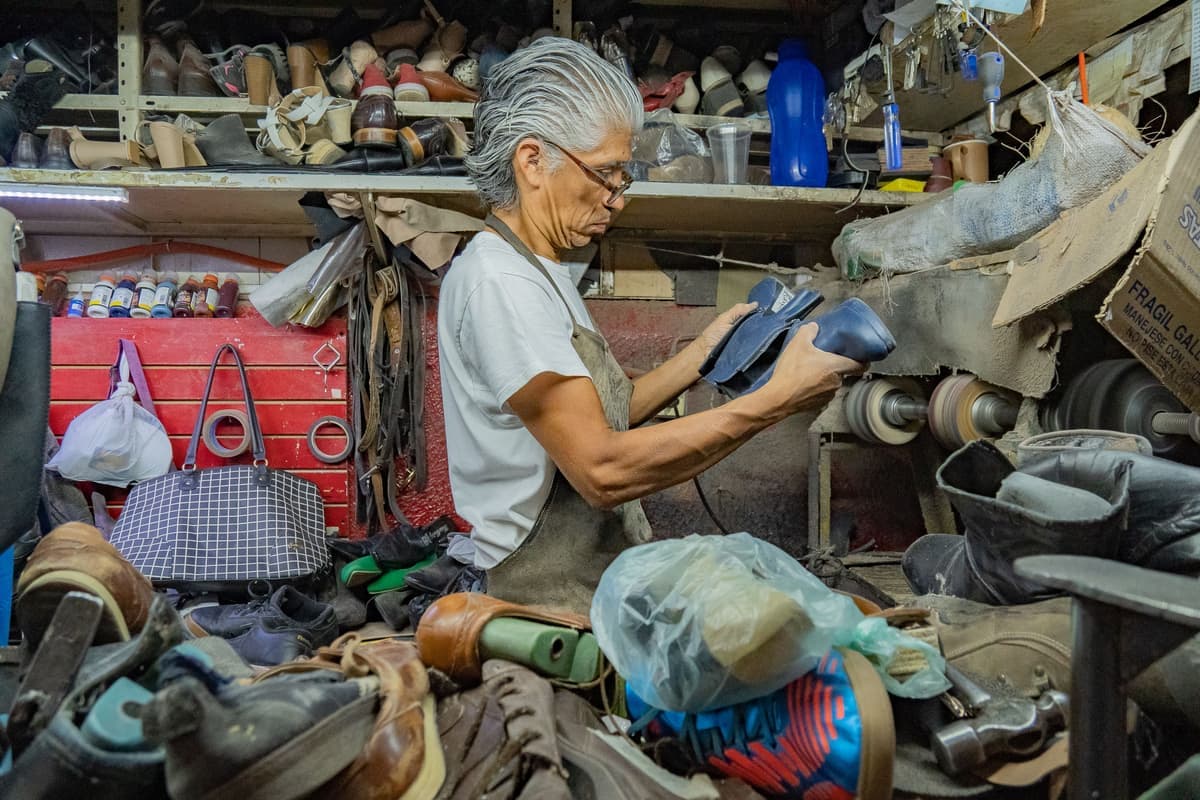
Goodyear welt and double-stitched welt boots can be resoled, repeatedly, for decades. Cemented boots - where the sole is glued on - usually cannot be resoled economically, so when the sole wears through the boot is finished. That one distinction is worth more than any other spec on the page.
| Construction | How it works | Resoleable | Found on |
|---|---|---|---|
| Goodyear welt | A welt strip is stitched to the upper and insole, then the outsole is stitched to the welt | Yes, many times | Mid and premium boots |
| Double-stitched welt | Two rows of stitching through the welt | Yes | Traditional western boots |
| Stitchdown | The upper is flared out and stitched directly to the midsole | Yes, by a specialist | Some work and heritage boots |
| Cemented | The outsole is glued to the upper | Rarely worth it | Budget boots, many modern sport lines |
| Bonded composite | Modern outsole chemically bonded to an engineered base | No | Comfort-engineered boots |
What a welt actually does
A welt is a strip of leather or synthetic running around the edge of the sole. The upper and insole are stitched to it, and then the outsole is stitched to the welt. The point is that the outsole's stitching does not go through the upper - so a cobbler can cut that stitching, lift the old sole off, and stitch a new one on without touching the part of the boot that fits your foot. That is why a welted boot can be rebuilt three or four times.
Is a cemented boot a bad boot?
No - and this is where boot forums get unhelpful. A cemented boot with a good leather upper and a rubber sole will be comfortable and will last years of occasional wear. The glue is not going to fail; the sole is going to wear out, and at that point you replace the boot. If you wear boots twice a month, that is a perfectly sensible purchase.
It becomes a bad purchase at frequency. Worn weekly, a cemented boot has perhaps three years in it; a welted boot resoled twice over the same period costs less in total. The crossover is roughly weekly wear - which is also the line we use in how much cowboy boots should cost.
How to tell which you are looking at
- Look for the words Goodyear welt, welted or double-stitched welt in the description. Makers advertise it, because it costs them more.
- Look at the edge of the sole in the product photos. A visible row of stitching around the outsole edge means a welt; a clean, seamless join means cement.
- If the description says nothing about construction, assume cemented. Nobody builds a welted boot and forgets to mention it.
One of each, to see the difference
A welted Heritage boot, a double-stitched Justin, a cemented budget boot and a bonded comfort boot.
These links go to Amazon and we earn a commission if you buy. How we pick.
 Illustrative photo
Ariat Heritage Roughstock
For the safest first pair for most men.
 Illustrative photo
Laredo Men's Leather Western Boot
For the lowest-risk way to find out if you like boots.
Illustrative photoTwisted X Tech X Boot
For the most comfortable thing that still looks western.
#ad - price checked on Amazon at the time you click. Last price check: October 13, 2026. How we are funded
Common questions
What is Goodyear welt construction?
A method where a welt strip is stitched to the upper and insole, and the outsole is then stitched to that welt. Because the outsole stitching does not pass through the upper, a cobbler can replace the sole repeatedly without rebuilding the boot.
Are cemented boots bad?
Not for occasional wear. A cemented boot with a good upper and rubber sole lasts years. The limitation is that it cannot be economically resoled, so frequent wear makes it a false economy.
How can I tell if boots are welted?
Look for a visible row of stitching running around the edge of the outsole, and for the words Goodyear welt or double-stitched welt in the description. Makers always advertise it.
How many times can a welted boot be resoled?
Typically three or four times before the upper and insole themselves need attention, which can be twenty years or more of regular wear depending on the boot and the cobbler.
Is welted construction worth paying for?
If you wear boots about weekly or more, yes - resoling costs far less than replacing. For a few wears a year, the extra cost does not return.
About the author
Selena H.
Selena H. is the owner and editor of Spur & Stitch. She started the site after discovering how much western-boot buying advice assumes you already know what a welt is. Every guide here is written for the person buying their first pair.
Read next
Care
Resoling cowboy boots
When boots are worth resoling, what the job involves, and when replacing is the better call.

Boots
How much should cowboy boots cost?
What each price band buys, and the one question that should decide your budget.

Boots
How long do cowboy boots last?
Realistic lifespans by construction, what fails first, and the routine that doubles them.

Boots
The parts of a cowboy boot
Vamp, shaft, welt, counter, shank, pull straps - every part named and explained.