Pillar guide
The cowboy boot sizing guide
Boots have no laces, so the whole fit rests on four checkpoints. Learn them and you can order online with confidence.
By Selena H. · Updated October 13, 2026
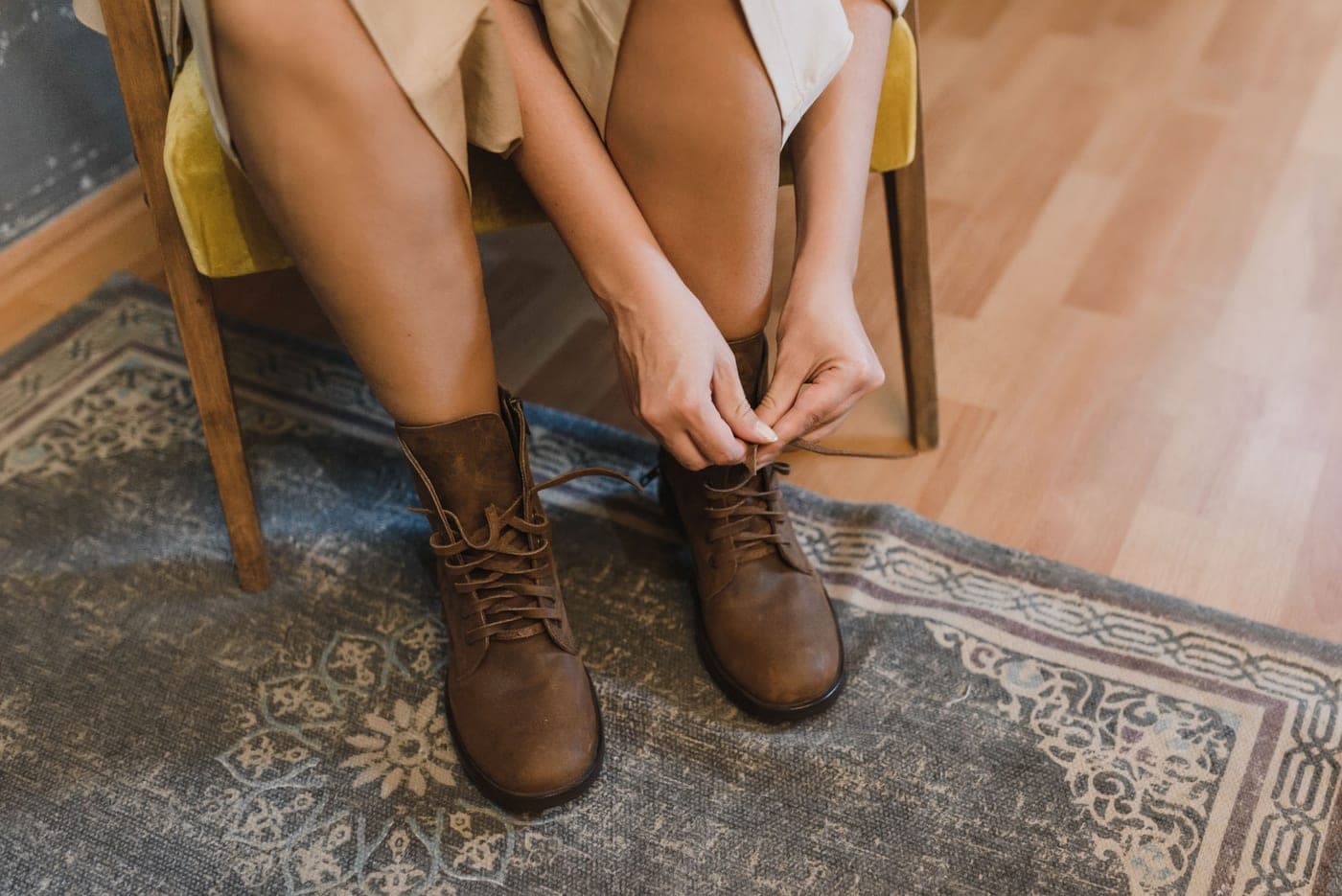
Start at your normal street shoe size. A correctly fitting cowboy boot is snug across the ball of the foot, firm over the instep, has a quarter to half inch of heel lift when new, and leaves about half an inch in front of your toes. A boot that feels loose anywhere will not tighten, and a boot that is too long will slip at the heel forever.
That is the whole thing. The rest of this page explains why each checkpoint exists, what to do when one of them is wrong, and how to handle the awkward cases - between sizes, wide feet, ordering online.
Why cowboy boots fit differently
A lace-up shoe is adjustable: if your foot moves, you tighten the laces. A cowboy boot has nothing to adjust. Instead it holds your foot in two places - the instep, where the arch of the boot grips over the top of your foot, and the heel pocket at the back. Everything about western sizing follows from that. The instep is the primary hold, which is why a boot that feels tight across the top when new is usually correct and a boot that slides on easily is usually too big.
The four checkpoints
The instep: firm, with a pop
Your foot should require a real pull to get in, and go in with a distinct pop as it clears the instep. That pop is the sound of a correctly sized boot. If your foot slides straight in, the boot is too big.
The ball of the foot: snug, sitting at the widest part
The widest part of your foot should sit at the widest part of the boot. If it sits behind that point, the boot is too long; if it is squeezed in front of it, too short.
The heel: a quarter to half inch of lift
Yes, lift. A new boot's sole is stiff and does not flex, so the heel rises as you walk. As the sole breaks in, that lift drops to almost nothing. A boot with zero heel lift when new will be too tight in a fortnight.
The toes: about half an inch of room
Enough that your toes never touch the end when you walk downhill. Not so much that your foot slides forward with every step.
Men's and women's sizing, compared with street shoes
| Relationship to street shoe size | Standard width | Wide option | |
|---|---|---|---|
| Men's western boots | Usually the same, occasionally half a size down | D | EE, with 2E/3E from some makers |
| Women's western boots | Usually the same | B | D |
| Children's | Measured size plus about half an inch of growing room | Varies by maker | Limited |
What to do when you are between sizes
Take the smaller size and a thicker sock. A boot that is half a size too small across the ball will stretch slightly in width as the leather relaxes; a boot that is half a size too long will never stop being too long, because leather stretches across the width and barely at all in length. If you only remember one thing from this page, make it that one.
Ordering online without guessing
- Measure both feet at the end of the day, standing, and work from the larger one.
- Order your street shoe size unless the brand's own guidance says otherwise.
- Order from somewhere with free returns, and try the boots indoors on carpet. Boots worn outside cannot be sent back.
- Wear the socks you will actually wear with them - a thin cotton sock and a mid-calf merino sock are most of a half size apart.
- Run the four checkpoints. If any one of them fails, return rather than hoping break-in will fix it.
The problems each symptom points to
| Symptom | What it means | Fix |
|---|---|---|
| Foot slides straight in with no pop | Boot is too big | Size down, not an insole |
| Heel lifts more than half an inch, or moves sideways | Too long, or heel pocket too wide | Size down, or try a different brand's last |
| Pinching at the little toe | Toe shape too narrow | Wider toe shape - see toe shapes |
| Pressure across the top of the foot | High instep or boot too small in volume | Wide width, or a different brand |
| Toes hitting the end going downhill | Boot too short | Size up half, then recheck the heel |
| Rubbing on the calf | Not a sizing problem | Mid-calf socks - see socks for cowboy boots |
The three things that fix a near-miss
A thicker sock takes up slack, a narrow-cut insole restores support, and a stretcher opens one tight spot. None of them rescues a boot that is the wrong size.
These links go to Amazon and we earn a commission if you buy. How we pick.
 Illustrative photo
Western Boot Insoles with Arch Support
For a boot that fits but hurts your arch.
Illustrative photoTwo-Way Boot Stretcher
For a boot that is tight in one specific spot.
#ad - price checked on Amazon at the time you click. Last price check: October 13, 2026. How we are funded
Common questions
Do cowboy boots run true to size?
Mostly yes - start at your street shoe size. Expect variation of about half a size between brands, and judge the fit at the instep and heel rather than by the number on the box.
Should cowboy boots be tight or loose when new?
Snug, with a firm pop over the instep, and a quarter to half inch of heel lift. They should never be loose - there are no laces to take up slack later.
How much heel slip is normal in cowboy boots?
A quarter to half an inch of lift in a new boot is normal and disappears as the sole breaks in. More than that, or the heel moving sideways, means the boot is too long or the heel pocket is too wide.
Should I size up or down in cowboy boots?
Down, if you are between sizes, with a thicker sock. Leather stretches in width but almost never in length, so a boot that is too long stays too long.
How much room should be at the toe of a cowboy boot?
About half an inch - enough that your toes never touch the end when you walk downhill, and little enough that your foot is not sliding forward with each step.
Can an insole fix boots that are too big?
Only marginally, and it creates a new problem: an insole reduces internal volume and lifts the foot, which can worsen heel slip. If the boot is genuinely too big, return it.
About the author
Selena H.
Selena H. is the owner and editor of Spur & Stitch. She started the site after discovering how much western-boot buying advice assumes you already know what a welt is. Every guide here is written for the person buying their first pair.
Read next
Fit & sizing
Cowboy boot size chart
Foot-length size charts for men, women and kids, plus what the width letters mean.
Fit & sizing
Cowboy boot width letters, explained
What B, D and EE actually change - and why toe shape usually matters more than width.
Fit & sizing
Cowboy boots for wide feet and wide calves
Two different problems with two different answers - plus the cobbler fix nobody mentions.
Boots
The best cowboy boots for beginners
Eight first pairs matched to real buyers, with the sizing and break-in answers on the same page.
Fit & sizing
Heel slip in cowboy boots, explained
How much heel movement is normal, how to tell lift from slip, and what fixes it.