Care
How to store cowboy boots
The fault that quietly ruins tall boots is not wear - it is a shaft that folded over in a closet and set that way.
By Selena H. · Updated October 13, 2026
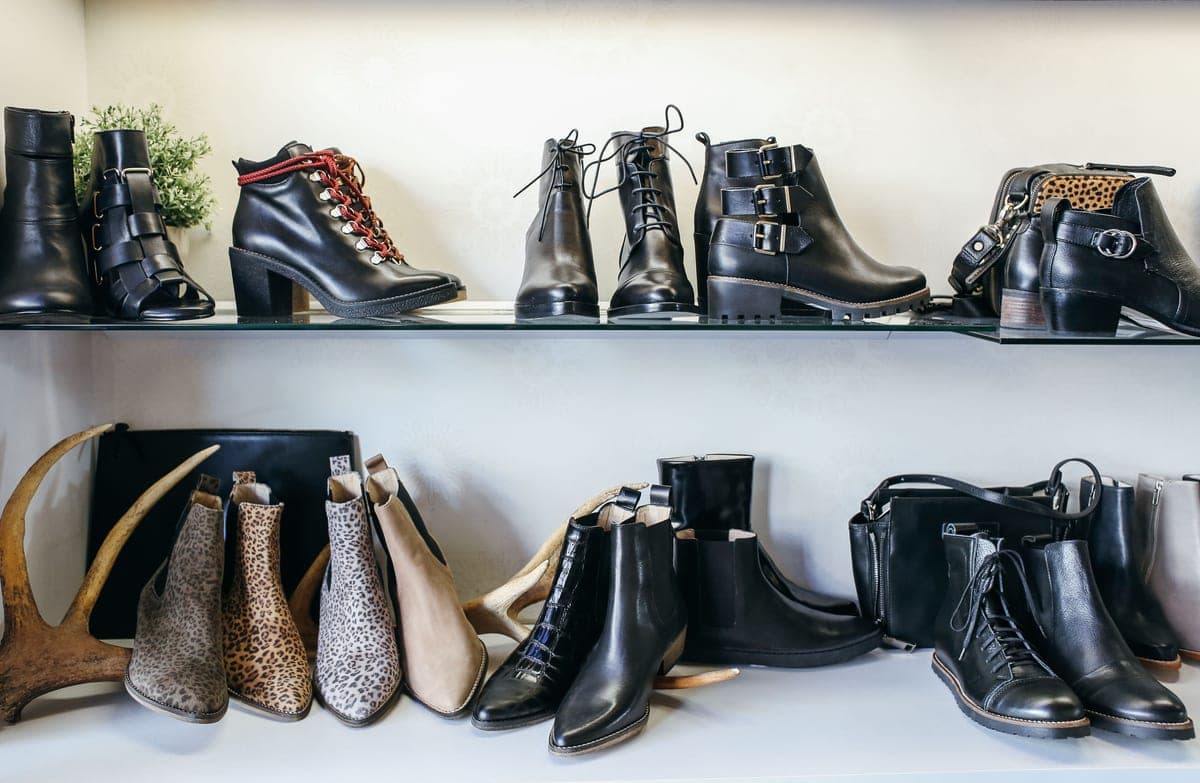
Store boots upright with trees or shapers in the shaft, at room temperature, away from direct sun and away from heat. Never store them damp, never in a sealed plastic box, and never lying on their side for months - a tall shaft that folds at the ankle sets that crease permanently.
The collapse problem
A 13-inch leather shaft has nothing holding it up. Left empty in a closet for a season it folds forward at the ankle, and leather remembers. The crease becomes permanent, the boot looks tired from across the room, and nothing short of a cobbler re-blocking the shaft fixes it. This is the most common way good boots are quietly ruined, and it costs about twenty dollars to prevent.
Trees versus shapers
| Cedar boot trees | Plastic / fabric shapers | |
|---|---|---|
| Holds the shaft upright | Yes | Yes |
| Absorbs moisture | Yes - cedar wicks genuinely | No |
| Deodorises | Yes | No |
| Cost | Higher | A few dollars a pair |
| Maintenance | Light sanding once a year | None |
| Best for | Boots you intend to keep | Several pairs on a budget |
The rules
- Dry before storing. A damp boot in a closet grows mold and the lining is where it starts. If the boots were wet, give them two days at room temperature first.
- Upright, with support in the shaft. Trees or shapers. The point is the ankle, not the toe.
- Out of direct sun. UV fades and dries leather. A boot left on a sunny windowsill for a summer comes out a different color on one side.
- Away from heat. Radiators and hot attics drive the oils out of leather.
- Not in sealed plastic. Leather needs to breathe. A dust bag or an open shelf is right; a sealed tub is how boots come out of storage moldy.
- Condition before a long storage. A boot going away for a season should go away conditioned, not dry.
Rotating pairs
If you wear boots daily, two pairs alternated will last considerably more than twice as long as one pair worn every day. The reason is moisture: a day of wear leaves real moisture in the lining and insole, and a boot that never gets a full day to dry degrades from the inside. This is the cheapest longevity trick there is, and it applies to any leather footwear.
Storage, sorted
Trees for the pairs you care about, shapers for the rest, and a conditioning before any long storage.
These links go to Amazon and we earn a commission if you buy. How we pick.
 Illustrative photo
Bickmore Bick 4 Leather Conditioner
For the one conditioner to own.
#ad - price checked on Amazon at the time you click. Last price check: October 13, 2026. How we are funded
Common questions
How should you store cowboy boots?
Upright, with boot trees or shaft shapers inside, at room temperature, out of direct sun and away from heat. Never damp, and never sealed in plastic.
Do cowboy boots need boot trees?
Tall-shafted boots effectively do. Without support the shaft folds at the ankle in storage and the crease becomes permanent. Cedar trees also absorb moisture; plastic shapers do the structural half for less.
Can you store boots lying down?
For a few days, yes. For months, no - the shaft creases where it folds and leather sets in that position. Store tall boots upright with support.
Should you store boots in plastic boxes?
Not sealed ones. Leather needs air; a sealed container traps moisture and causes mold, usually starting in the lining. A dust bag or an open shelf is better.
Does rotating boots make them last longer?
Significantly. A day of wear leaves moisture in the lining and insole, and alternating pairs gives each a full day to dry - which more than doubles the effective life of each pair.
About the author
Selena H.
Selena H. is the owner and editor of Spur & Stitch. She started the site after discovering how much western-boot buying advice assumes you already know what a welt is. Every guide here is written for the person buying their first pair.
Read next
Care
How to clean cowboy boots
The twenty-minute routine that stops leather cracking - what to use and in what order.
Fit & sizing
Boot stretchers and boot jacks
The two cheapest tools in western boots, what each does, and what neither can fix.
Boots
How long do cowboy boots last?
Realistic lifespans by construction, what fails first, and the routine that doubles them.
Care
Cowboy boots in rain and snow
What rain and road salt do to leather, how to prepare, and the right way to dry a soaked pair.