Fit & sizing
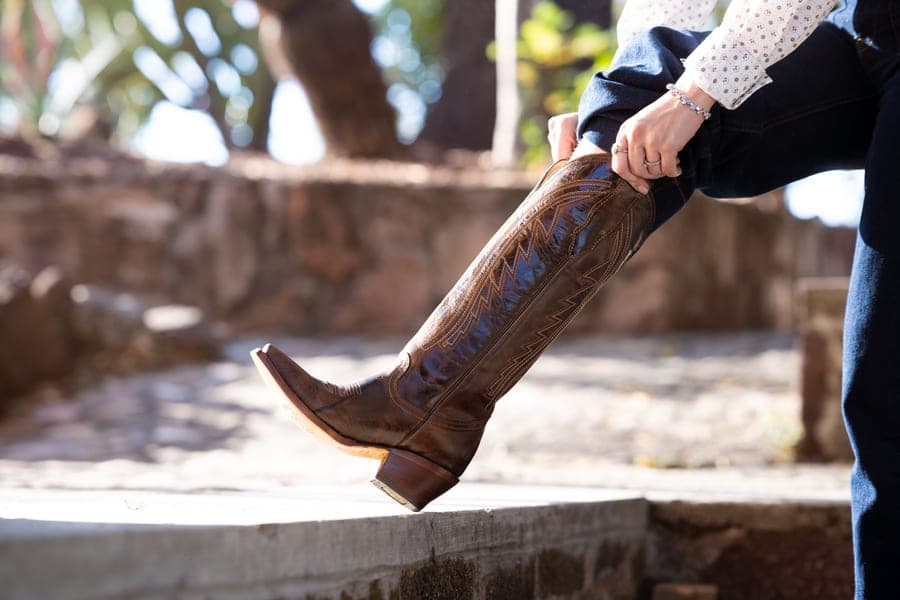
How to put on and take off cowboy boots
There is a technique, nobody teaches it, and getting it wrong is how heel counters get crushed.
By Selena H. · Updated October 13, 2026
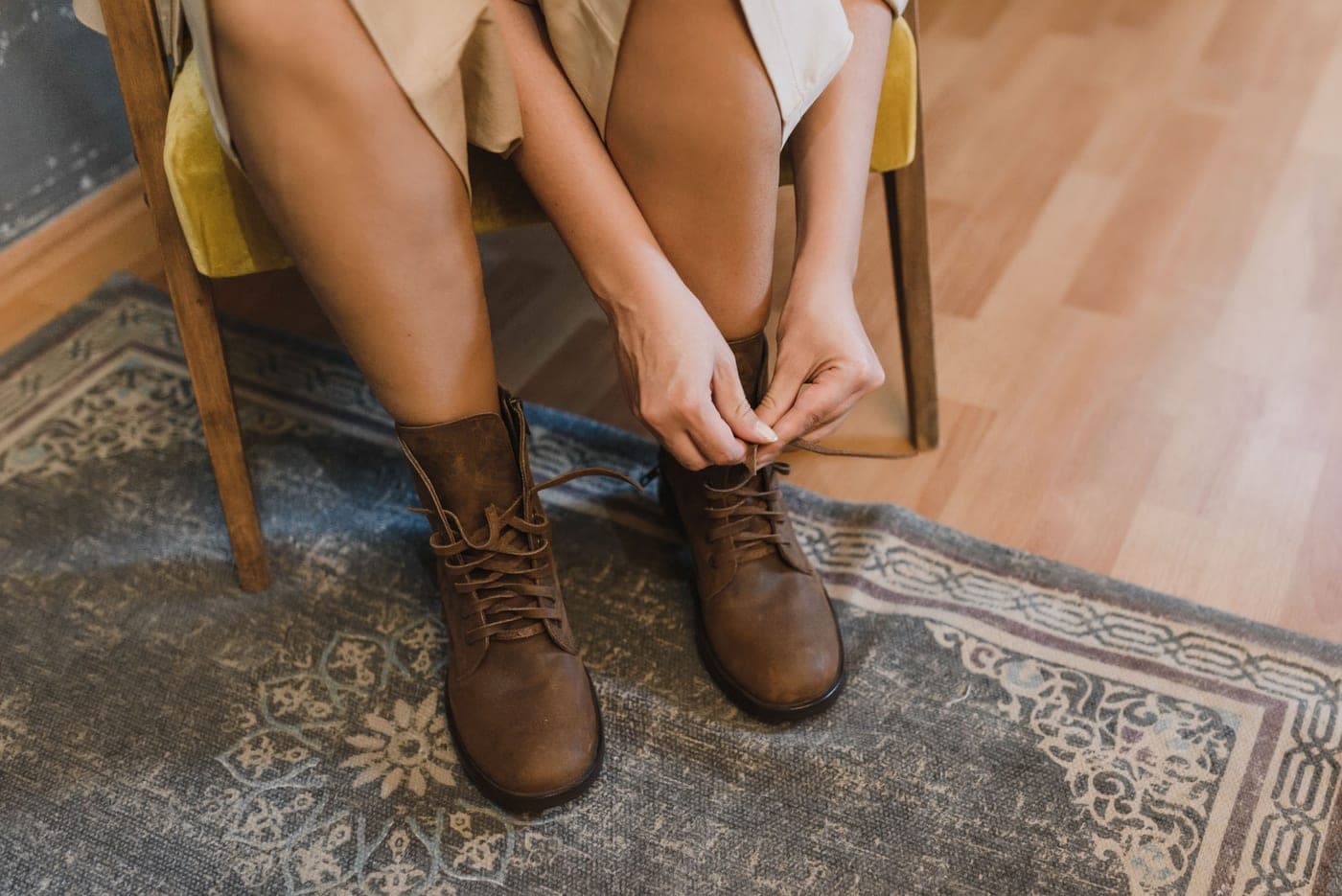
To put them on: stand up, hold both pull straps, point your toes and pull straight up until your foot pops through the instep, then stamp once to seat the heel. To take them off: use a boot jack. Never stand on the back of one boot with the other foot - that crushes the heel counter and permanently changes the fit.
Getting in
Stand, do not sit
Standing lets you use your body weight. Sitting means pulling with arm strength alone against a boot that is designed to grip.
Open the shaft
Hook a thumb inside each pull strap and spread the top of the shaft. A stiff new shaft needs encouragement.
Point your toes
The instep is the tight part. Pointing your toes narrows the profile of your foot so it can pass through.
Pull straight up, evenly
Both straps at once. Rocking side to side twists the shaft and makes it harder, not easier.
Stamp once
A firm stamp on a hard floor drops your heel into the heel pocket. If it does not seat, your sock is probably bunched.
Getting out
A boot jack is a notched block of wood you step into. Put the heel of one boot into the notch, stand on the body of the jack with your other foot, and pull your foot straight out. It costs a few dollars, lives by the door, and will outlast several pairs of boots.
If a boot genuinely will not go on
- A new, stiff shaft - normal. It eases within a week. Work the shaft gently with your hands first.
- Your calf is too big for the shaft - the shaft will not stretch meaningfully. See wide feet and wide calves.
- A high instep - the boot may need a wide width rather than a longer size.
- A bunched sock - more common than people admit. Smooth the sock and try again.
- A bit of talc inside the shaft - an old trick that genuinely helps a sticky new boot.
What makes this easier
A jack for removal, a smooth sock for entry, and shapers so the shaft is still open next time.
These links go to Amazon and we earn a commission if you buy. How we pick.
#ad - price checked on Amazon at the time you click. Last price check: October 13, 2026. How we are funded
Common questions
How do you put on cowboy boots?
Stand up, hold both pull straps, point your toes and pull straight up until your foot pops through the instep, then stamp once to seat the heel. Standing lets you use body weight rather than arm strength.
How do you take off cowboy boots?
With a boot jack - put the heel into the notch, stand on the jack with your other foot and pull your foot straight out. Never lever one boot off with the other foot.
Why are cowboy boots so hard to put on?
They hold your foot at the instep instead of using laces, so a correctly sized boot is deliberately tight at that point. A new stiff shaft adds to it, and both ease within the first week.
Do you need a boot jack for cowboy boots?
For tall shafts, effectively yes. Without one, most people lever the boot off with the other foot, which crushes the heel counter and permanently damages the fit.
What if my boot will not go on at all?
Check for a bunched sock first, then work the shaft by hand. If your calf is larger than the shaft circumference, no technique helps - you need a shorter shaft, a wide-calf boot or a gore panel.
About the author
Selena H.
Selena H. is the owner and editor of Spur & Stitch. She started the site after discovering how much western-boot buying advice assumes you already know what a welt is. Every guide here is written for the person buying their first pair.
Read next
Fit & sizing
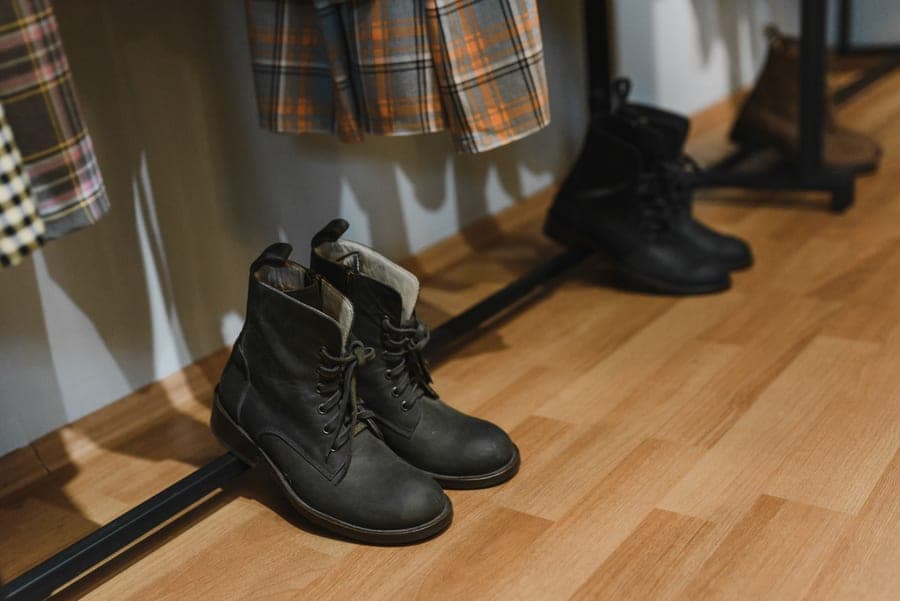
Boot stretchers and boot jacks
The two cheapest tools in western boots, what each does, and what neither can fix.
Boots
The parts of a cowboy boot
Vamp, shaft, welt, counter, shank, pull straps - every part named and explained.
Fit & sizing
Cowboy boots for wide feet and wide calves
Two different problems with two different answers - plus the cobbler fix nobody mentions.
Care
How to store cowboy boots
Tall boots collapse at the ankle in storage and the crease sets. How to prevent it.