Hot weather
Choosing a cowboy hat for hot weather
Three things make a hat cool in heat: an open weave, a vented crown and enough brim to shade your neck. Here is how to read for all three.
By Selena H. · Updated November 4, 2026
Spur & Stitch is reader-funded. As an Amazon Associate we earn from qualifying purchases - at no extra cost to you. Affiliate disclosure
We choose picks by comparing published specifications, construction, sizing guidance and aggregated owner feedback. We have not worn these boots ourselves. How we pick
There is no such thing as a cool felt hat, and there is no such thing as a straw hat that is automatically cool either. What determines whether a hat is bearable in July is construction: how open the weave is, whether the crown is vented, whether the straw is coated, and how much brim is actually shading your neck.
Buy palm leaf with vented eyelets if the heat is real and the hat is going to get sweated in - it is the most open weave in mainstream western hats. Buy a 6X or 20X shantung-type straw if you want the same hat to look presentable at a wedding or a concert. Do not buy a coated straw for heat, whatever the X number says, and do not buy felt for summer at all.
This page is organized by construction rather than by brand, because the brand tells you almost nothing about temperature. Resistol, Stetson and Ariat all sell hats that are miserable in heat and hats that are fine in it, often in the same price band. If you want the straw roundup instead - the hats ranked rather than the decision explained - that is the best straw cowboy hats.
Quick picks
Tap any row to jump to the full write-up. The price column goes straight to Amazon.
| # | Product | Best for | Price |
|---|---|---|---|
| 1 | 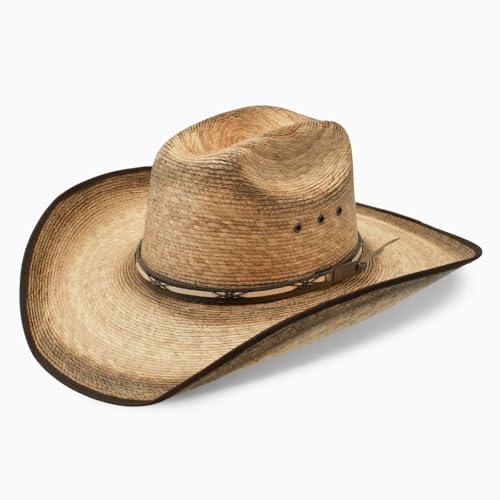 Resistol Amarillo Sky Palm HatYou give up refinement. | real sun and real sweat, not a photograph | |
| 2 | 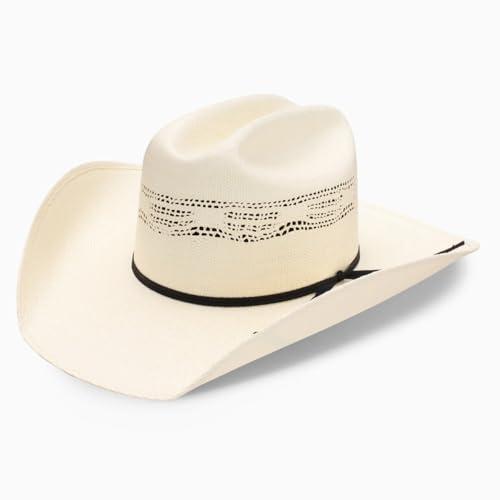 No offer at last check Resistol Ringer 7X Bangora Straw HatYou give up formality and lifespan. | a first hat, and every summer event | |
| 3 | 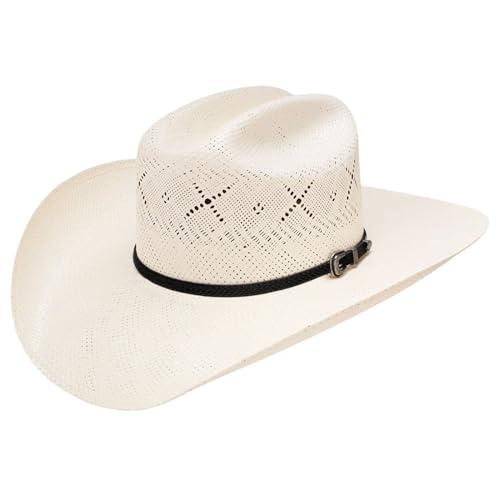 Resistol 20X All My Ex's Straw HatYou give up the freedom to be careless. | the man who actually wears a straw hat every day | |
| 4 | 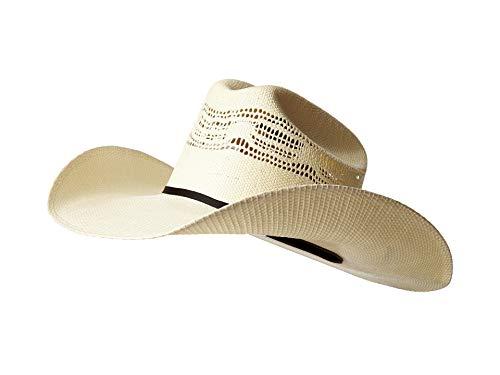 Ariat Straw Western HatYou give up weave density and longevity. | the cheapest hat worth buying |
#ad - price checked on Amazon at the time you click. Last price check: November 28, 2026. How we are funded
The three variables that actually matter
In order of how much difference each one makes on a genuinely hot day.
1. Weave openness, which is not the same as the X number
A hat gets cool by letting air through the body, and a tighter weave lets less air through. This is the detail that trips people up, because the X rating on a straw hat indicates weave density - a higher X means a tighter, finer, more durable weave - so the better-rated hat is frequently the warmer one. Retailers describe the X factor as indicating tight weave and narrow reed for durability, and that is honest: you are buying longevity and shape retention, not ventilation. A coarse palm leaf hat at a quarter of the price moves more air than a fine 20X straw, and forum regulars who wear a straw hat every day in the sun tend to favor palm leaf for exactly that reason.
2. Whether the crown is vented
Vents are either punched eyelets, a woven open band around the crown, or nothing at all. Stetson describes its western straw styles as having wider brims and vented crowns for cool comfort, and its outdoor styles as carrying ventilation eyelets. The honest caveat is that opinion divides on how much they do: some long-time wearers report never finding vent holes to make any difference. Our reading of it is that vents matter when the rest of the hat is open too, because air has to come in somewhere to go out of the eyelets - a vented hat in a tight coated straw is mostly decorative.
3. Brim width, which is about your neck, not your head
A wider brim does not make the hat cooler. It shades more of you - specifically your ears, the back of your neck and your shoulders, which is where sun actually ruins a day outdoors. Four to four and a half inches is the classic proportion and the right default; five inches and up is a working brim for real exposure. Narrower than four inches reads modern and leaves your neck in the sun, which is the trade you are making for the look.
Pick 1
Resistol Amarillo Sky Palm Hat - best for real sun and real sweat, not a photograph
Palm leaf is the working person's hot-weather hat and this is the mainstream-brand version of it. Retailer listings for the Amarillo Sky, from Resistol's Jason Aldean collection, describe a palm leaf body with a cattleman crease, vented metal eyelets in the crown, a leather sweatband and a brim listed at 4 to 4 1/8 inches depending on the retailer. Palm is a coarser, more open weave than a shantung or paper straw, which is the entire point in heat - more air moves through it, and experienced daily wearers tend to prefer palm for exactly that reason. The other practical advantage is that palm leaf is more forgiving when wet than a paper straw: it can be reshaped by hand to a degree rather than being permanently ruined by one downpour.
What you give up: You give up refinement. A coarse open weave looks rustic rather than dressy next to a fine shantung, the weave shows gaps in sunlight, and no straw hat can be properly reblocked once it is crushed.
Good
- Open weave plus crown vents is the coolest combination here
- Takes getting wet better than paper straw
- Leather sweatband at a mid price
Less good
- Coarse weave is not a dress-hat look
- Retailers disagree on brim width
- Still unrepairable if crushed
| Material | Palm leaf |
|---|---|
| Crown | Cattleman crease |
| Brim | 4 to 4 1/8 in (varies by retailer listing) |
| Ventilation | Vented metal eyelets |
| Sweatband | Leather |
| Season | Hot weather |
Pick 2
Resistol Ringer 7X Bangora Straw Hat - best for a first hat, and every summer event
No offer at last checkIf you are buying one hat and it has to work at a concert in July, buy straw - and this is the cheapest way into a real Resistol. The listing publishes a 7X Bangora straw with a 4-inch brim, a 4 3/8-inch crown, a leather sweatband, a ribbon hat band and a regular oval fit. The reason it suits a beginner is that straw is cheap enough to learn on. You will sit on your first hat, leave it on a car seat in the sun and get caught in rain in it; doing all of that to a straw hat costs a fraction of doing it to 6X felt. Sizing is the one thing to get right - measure your head and buy the size, do not guess between S/M/L.
What you give up: You give up formality and lifespan. Straw is a warm-weather hat, it will not take a season of hard use, and it cannot be reshaped like felt.
Good
- Cool in heat
- Cheap enough to learn on
- Pre-creased, ready to wear
Less good
- Not a dress hat
- Shorter life
- Cannot be reshaped
| Material | 7X Bangora straw |
|---|---|
| Brim | 4 in (per listing) |
| Crown | 4 3/8 in (per listing) |
| Sweatband | Leather |
| Season | Spring and summer |
Pick 3
Resistol 20X All My Ex's Straw Hat - best for the man who actually wears a straw hat every day
If you have worn through a 6X straw in a season, this is the next rung rather than a jump to felt. Resistol lists the Colt, from its George Strait collection, as a 20X straw with a 4 1/8-inch cattleman crown, a 4 1/4-inch brim and a leather sweatband. The X number on straw indicates weave density rather than fur content, and the practical difference at 20X is that the weave is tighter and stiffer, so the brim holds its shape instead of going soft and wavy by August. It is pre-creased in the cattleman shape, which is the right call for a hat you will wear daily and never have reshaped.
What you give up: You give up the freedom to be careless. This costs several times an entry straw, and straw still cannot be reblocked - crush it and it is finished, 20X or not.
Good
- Tight weave holds the brim shape
- Classic brim and crown proportions
- Leather sweatband, not cloth
Less good
- Expensive for straw
- Still not repairable if crushed
- Warm-weather only
| Material | 20X straw |
|---|---|
| Crown | Cattleman, 4 1/8 in (per Resistol) |
| Brim | 4 1/4 in |
| Sweatband | Leather |
| Season | Spring and summer |
Pick 4
Ariat Straw Western Hat - best for the cheapest hat worth buying
Ariat's straw hats sit a tier below the Resistol and Stetson straws in weave quality and a long way below them in price, with pre-creased crowns, bound brims and a shaped bash ready to wear out of the box. They are the right first hat for someone who is not sure a hat suits them at all. Spend an hour in one at an outdoor event and you will know whether you want to invest in felt - and if the answer is no, you have not spent much finding out.
What you give up: You give up weave density and longevity. A looser straw loses its shape faster and will not survive being packed in a bag.
Good
- Low cost of entry
- Ready to wear
- Fine for one summer
Less good
- Loses shape
- Not durable
- Basic finish
| Material | Straw |
|---|---|
| Crown | Pre-creased |
| Brim | Bound |
| Position | Entry |
#ad - price checked on Amazon at the time you click. Last price check: November 28, 2026. How we are funded
Straw types, decoded
Four names cover almost everything on a western hat wall, and only one of them is a grass. Stetson's own straw guide is the clearest published source on what each one is:
| Name on the label | What it actually is | In heat |
|---|---|---|
| Palm leaf | Dried palm fronds split into straw and braided - Stetson describes fine, tight bands; in practice a coarser, bigger weave than paper straws | The best of these. Open, breathable, and it handles sweat and damp better than paper |
| Shantung | Stetson describes it as plant-based paper rolled into a straw-like form - featherweight, and comparable to toquilla in durability | Good. Light on the head, finer weave, dressier - the all-rounder |
| Toquilla / Panama | Braided leaves of a palm-like plant native to Ecuador, the traditional straw of lightweight breathable panama hats | Very good, but rarely a western shape and priced well above the others |
| Bangora | Also plant-based paper, woven in the perpendicular pattern Stetson calls a Bangkok weave; retailers market it as tough | Acceptable. Stiffer and more rigid, which usually means less airflow |
What about a vented felt hat?
They exist, and they are still felt. Felt is a cold-weather and dress material - it is dense by design, which is what makes it hold a crease and shed rain - and punching eyelets in it does not change the physics much. If you own one felt hat and one summer event, wear the straw and keep the felt for autumn. The full seasonal argument is in felt vs straw cowboy hats. The one exception worth knowing: a short-brim felt like a Stetson Open Road is a dress hat, so if the hot-weather occasion is indoors and formal, that is a different question from a hat for standing in a field.
Color, and the thing everyone gets backwards
Natural, tan and silverbelly straws reflect more heat than a dark or black-painted straw, so a light hat is the cooler choice in direct sun. The complication is dirt: a natural straw shows sweat stains along the sweatband line and dust on the brim within a season, and a straw hat cannot be cleaned aggressively. Stetson's own care guidance is to brush dirt off first and then wipe with a damp cloth, spot-testing in an inconspicuous area, and to dry at room temperature - which is as far as you can safely go. Dark straws hide all of it and run hotter. Pick the one whose failure mode you mind less.
Sizing a hat you are going to sweat in
Two things change in heat. Your head swells slightly over a long hot day, which is a real effect and an argument for buying the size that is comfortable in the afternoon rather than the one that felt snug in the morning. And a sweatband absorbs sweat, which is what it is for - Stetson's care page specifically warns against leaving a hat in an enclosed car in summer because heat plus perspiration can shrink the sweatband. A shrunk sweatband turns a correctly sized hat into a headache, so that one line is worth taking seriously.
- Measure, do not guess. Numbered sizes exist for a reason; the method is in the cowboy hat sizing guide.
- If you are between sizes in a straw, take the larger one. Straw cannot be stretched the way felt can be opened up by a hatter.
- Add a sweatband strip if it is loose, not if it is tight. A foam sizing strip takes up a quarter size cleanly.
- Never store it in a hot car. This is the most common way a well-fitting straw hat stops fitting.
The accessories that matter outdoors
Wind is the problem nobody plans for. A four-and-a-half-inch brim in an open field behaves like a sail, and the usual fix is a stampede string - a leather or cord chin strap fitted through the crown. On a working hat it is standard; on a concert hat it looks like you are trying. The other practical note is that straw hats are damaged more by being set down on their brim and by being packed than by being worn, so Stetson's advice to store a straw hat upside down on its crown is worth following at home. The same fiber logic applies to what you wear under the hat: the most durable pearl snap shirts explains why cotton beats a blend on a hot day and over a decade.
What goes with the summer hat
Hot weather is also where a light cotton shirt earns its place over a blend, and where a straw hat looks right with a plain leather belt rather than a show buckle.
These links go to Amazon and we earn a commission if you buy. How we pick.
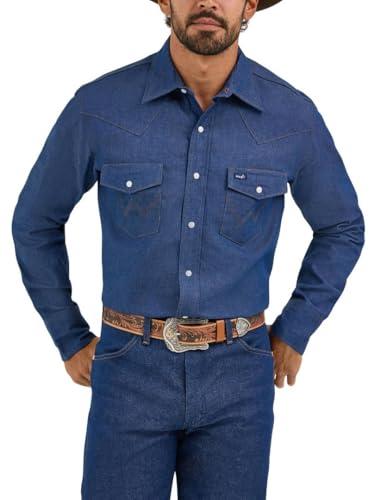
Wrangler Cowboy Cut Western Snap Work Shirt
For the cotton one you will still own in five years.
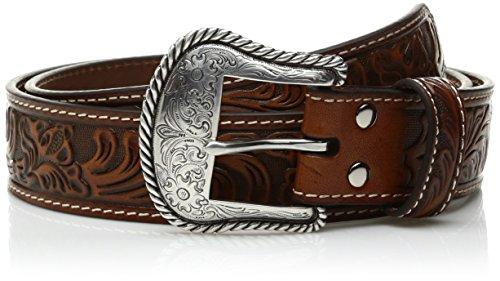
#ad - price checked on Amazon at the time you click. Last price check: November 28, 2026. How we are funded
Material definitions, vent descriptions and care instructions above are drawn from Stetson's published straw hat guide and from the makers' and retailers' own product listings, linked in Sources. There is no independent airflow or temperature testing of western hats to cite, so the comparative heat verdicts here are reasoning from weave openness and construction rather than measurement, and we say so where opinion is divided.
Which hat for which heat
- Outdoors all day, every day, in real sun - a vented palm leaf in a 4 to 4 1/2 inch brim. The open weave is the coolest option in mainstream western hats and palm handles sweat and damp better than paper straw.
- One hat for a hot-weather wedding, a concert and a Saturday - a 6X straw in the classic proportions. Finer weave, lighter on the head, and it photographs as a proper hat rather than a work hat.
- You already wear a straw hat daily and keep wearing them out - a 20X. You are paying for weave density and shape retention, and accepting slightly less airflow for a hat that still looks right in August.
- You are not sure a hat suits you at all - an entry straw. Spend one summer in it, learn your brim width and crease, then buy properly.
- It is hot and the event is formal and indoors - this is not a straw question. See the best felt cowboy hats and pick a short brim.
Once the hat is chosen, the thing that most often looks wrong is the pairing rather than the hat - a straw hat with the wrong boots reads as costume. Matching a hat to your boots covers that, and cowboy hat care covers keeping a straw hat alive through the season it is built for.
Common questions
What is the coolest cowboy hat material for hot weather?
An open-weave palm leaf, particularly one with vented eyelets in the crown. Palm is a coarser, more open weave than the paper-based straws like shantung, so more air moves through the body of the hat, and it copes with sweat and damp better. Felt is the wrong material for heat in any weight.
Does a higher X rating mean a cooler straw hat?
No - usually the opposite. The X number on straw indicates weave density, so a 20X is tighter and finer than a 6X. You are buying durability and shape retention, not ventilation. A coarse palm leaf hat is cooler than a fine high-X straw.
Do vent holes in a cowboy hat actually work?
Somewhat, and opinion is genuinely divided - some long-time wearers report no noticeable difference. Vents help most when the rest of the hat is also open, because air has to enter somewhere. Punched eyelets in a tight or coated straw do very little.
What brim width should a summer cowboy hat be?
Four to four and a half inches for most people. Brim width does not change how hot the hat is - it changes how much of your ears, neck and shoulders are shaded. Five inches and up is a working brim for real sun exposure.
Can you wear a felt cowboy hat in summer?
You can, and it is uncomfortable. Felt is dense by design, which is what makes it hold a crease and shed rain, and vent eyelets do not change that much. The traditional seasonal rule - straw in warm months, felt in cold ones - exists for practical reasons.
Which color straw hat is coolest?
Natural, tan and silverbelly reflect more heat than dark or black straw, so a light hat is cooler in direct sun. The trade is that light straw shows sweat along the band line and dust on the brim, and straw cannot be cleaned aggressively.
Why did my straw hat stop fitting?
Most often a shrunk sweatband. Stetson's care guidance specifically warns against leaving a hat in an enclosed car in summer, because heat combined with perspiration can shrink the sweatband - which turns a correctly sized hat into a headache.
Sources
- Stetson - Straw hats: straw types, vents and care guidance
- Boot Barn - Resistol Jason Aldean Amarillo Sky palm hat (brim, cattleman crease, vented eyelets)
- Resistol - 20X straw hat range (crown, brim, sweatband)
- Resistol - Bangora straw hat range and grades
- The Fedora Lounge - long-running owner thread on palm leaf versus shantung for daily wear
About the author
Selena H.
Selena H. is the owner and editor of Spur & Stitch. She started the site after discovering how much western-boot buying advice assumes you already know what a welt is. Every guide here is written for the person buying their first pair.
Read next
Hats
The best straw cowboy hats
What separates a good straw hat from a cheap one, and the ones worth buying for summer.
Hats
Felt vs straw cowboy hats
Season, price, durability and formality compared - plus the traditional seasonal rules.

Hats
Cowboy hat sizing guide
How to measure, the conversion chart, oval head shapes, and how sizing tape works.
Hats
How to take care of a cowboy hat
Brushing, storing, drying a wet hat and cleaning the sweatband - the whole routine.
Outfits
What to wear to a country concert
The complete concert outfit for men and women, built for six hours upright outdoors.