Buy it for life
The most durable pearl snap shirts
Judged on ounces, fiber and how the snaps are set - not on how the plaid looks in a product photo.
By Selena H. · Updated November 4, 2026
Spur & Stitch is reader-funded. As an Amazon Associate we earn from qualifying purchases - at no extra cost to you. Affiliate disclosure

We choose picks by comparing published specifications, construction, sizing guidance and aggregated owner feedback. We have not worn these boots ourselves. How we pick
Durability in a western shirt is not a brand question. It is a fabric-weight question, a fiber question and a how-are-the-snaps-set question, and all three are usually printed on the listing if you know which lines to read.
Buy the Wrangler Authentic Cowboy Cut firm-finish work shirt if you want the most years per dollar - Wrangler publishes it as 100% cotton in a 7.25 oz twill. Buy the denim version of the same shirt if you would rather it fade than look worn out. Buy the Pendleton Canyon if you want one western shirt for the rest of your life and wool suits your climate. Skip the poly-cotton tier entirely if longevity is the point.
This page exists because the obvious search - best pearl snap shirt - returns the shirts that photograph best, and those are not the same shirts. A western snap shirt fails in four places and only one of them is the fabric you can see in the photo. If you are shopping the other direction and want the cheapest shirt with the right details instead, that list is the best affordable pearl snap shirts, and it is an honest recommendation for most occasions.
Quick picks
Tap any row to jump to the full write-up. The price column goes straight to Amazon.
| # | Product | Best for | Price |
|---|---|---|---|
| 1 | 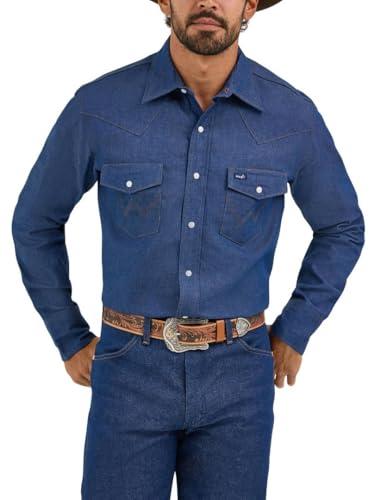 Wrangler Cowboy Cut Western Snap Work ShirtYou give up convenience. | the cotton one you will still own in five years | |
| 2 | 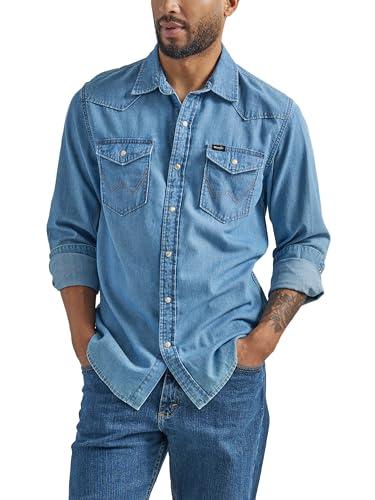 Wrangler Iconic Regular Fit Denim Snap ShirtYou give up formality and a quick break-in. | the shirt that hides its own wear | |
| 3 | 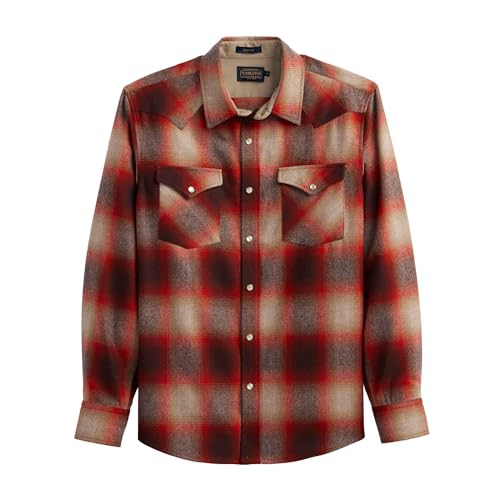 Pendleton Snap-Front Western Canyon ShirtYou give up summer, and you give up carelessness. | the one you hand down rather than replace | |
| 4 | 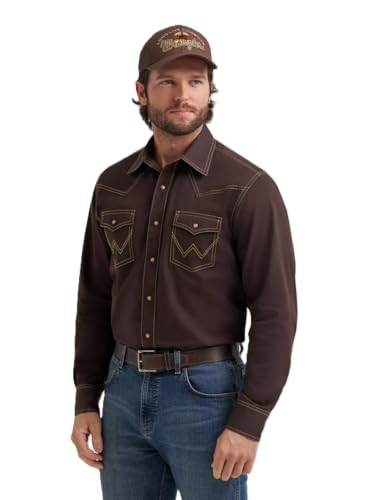 Wrangler Retro Premium Snap ShirtYou give up room. | a trimmer modern cut without leaving the mainstream price band | |
| 5 | 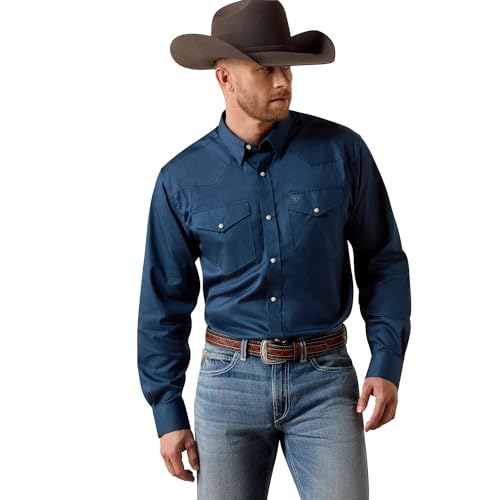 Ariat Lightweight Twill Classic Fit Snap ShirtYou give up the price advantage. | a pearl snap you can wear to a wedding |
#ad - price checked on Amazon at the time you click. Last price check: November 28, 2026. How we are funded
How we judged durability
We have not worn these for ten years, and nobody writing a page like this has. What we can do is read what the makers and their retailers publish, apply the criteria that actually determine how long a shirt lasts, and be clear about which parts are specification and which parts are inference. Our full method is on how we pick. Five criteria, applied in this order:
- A stated fabric weight, in ounces. This is the single most predictive number on a shirt listing and the one most listings omit. A 7 oz cotton twill is a different object from a 4 oz one, and makers who publish the figure are generally the ones who are not embarrassed by it.
- 100% natural fiber, or a declared, deliberate blend. Cotton and wool abrade slowly and soften as they go. Polyester resists wrinkles and then pills, and a pilled shirt looks finished long before it tears.
- Snap setting and placket construction. Snaps live on a reinforced strip of fabric. A thin single-layer placket is where a cheap western shirt dies - the snap pulls through the cloth and leaves a hole that cannot be repaired invisibly.
- Yoke and pocket construction you can see in the listing. Spade-point or bias-cut pockets, real front AND back yokes, and stitched-down seams all indicate the shirt was patterned as a work garment rather than drawn to look like one.
- Model continuity. A shirt that has been in continuous production for decades can be replaced in the same size and color in five years. A seasonal fashion western cannot, which matters more than it sounds when you have found one that fits.
Pick 1
Wrangler Cowboy Cut Western Snap Work Shirt - best for the cotton one you will still own in five years
This is the plain working shirt the whole category is descended from, and it is still priced like one. Retailer specifications describe a solid cotton twill with a firm finish, front and back yokes, spade-point flap pockets with snaps, three-snap cuffs and a pencil slot on the pocket - the pencil slot being the small giveaway that this was designed for someone at work rather than someone at a concert. Because it is 100% cotton rather than a blend, it presses properly, it softens over a couple of years instead of pilling, and it reads as clothing rather than costume. Buy it in a muted solid. It will go to a bar, a wedding reception and a Tuesday, which is more than the loud plaid you are tempted by will do.
What you give up: You give up convenience. Cotton twill with a firm finish creases hard, so this is a shirt that needs an iron every single time, and the traditional cut is generous through the body.
Good
- All-cotton at a work-shirt price
- Presses and softens properly
- The original detail set
Less good
- Creases badly
- Needs ironing every wear
- Cut is roomy, not modern
| Fabric | Cotton twill, firm finish |
|---|---|
| Yokes | Front and back |
| Pockets | Spade-point flaps with snaps, pencil slot |
| Cuffs | Three snaps |
| Fit | Traditional, generous through the body |
Pick 2
Wrangler Iconic Regular Fit Denim Snap Shirt - best for the shirt that hides its own wear
Same pattern as the firm-finish twill work shirt, cut in cotton denim instead - and denim is the fabric that ages best out of everything in this category. Retailer listings for the indigo model (style 70127MW, with a stone-washed 70127SW alongside it at a published 7.25 oz) describe 100% cotton, western front and back yokes, a spread collar, two spade-point flap pockets with snaps and a pencil slot in the left one, and three-snap cuffs. The practical argument for denim over twill is fade: a khaki twill shirt looks dirty when it wears, and an indigo denim shirt looks lived-in. Three years of elbow abrasion on this reads as character rather than damage, which is most of why old western snap shirts still turn up in working closets.
What you give up: You give up formality and a quick break-in. New firm-finish denim is stiff enough to stand up on its own for the first few washes, and a denim shirt over denim jeans needs a tonal gap or it reads as a uniform.
Good
- Fades instead of looking worn out
- All cotton at a work-shirt price
- The full western detail set
Less good
- Stiff until it has been washed several times
- Needs a tonal gap from your jeans
- Heavy for summer
| Fabric | 100% cotton denim (7.25 oz on the stone-wash listing) |
|---|---|
| Yokes | Western front and back |
| Pockets | Two spade-point snap flaps, pencil slot |
| Cuffs | Three snaps |
| Collar | Spread |
Pick 3
Pendleton Snap-Front Western Canyon Shirt - best for the one you hand down rather than replace
This is the top of the category and the only shirt here that is not cotton. Pendleton describes the Canyon as a western-style shirt in its machine-washable Umatilla wool, sourced from Oregon ranchers and woven in the brand's own American mills, with pearlized snaps, peaked yokes, flapped button-through chest pockets and a shirttail hem. Wool is what pushes it into buy-it-for-life territory: it resists abrasion better than a shirting cotton, it sheds odor and creases between wears, and it stays wearable across a far wider temperature range than twill. Pendleton has woven this cloth since the 1900s and keeps the pattern in production year after year, so a replacement panel or a second shirt in the same plaid is a realistic thing to find in five years. It costs several times what a cotton work shirt does.
What you give up: You give up summer, and you give up carelessness. Wool is a cold-weather fabric and uncomfortable above roughly 70F, it needs a gentle machine cycle and a flat dry, and moths will find it if you store it badly.
Good
- Wool outlasts shirting cotton at the elbows and cuffs
- Woven in the brand's own US mills
- Pattern stays in production, so it can be matched later
Less good
- Too warm for most of the year
- Several times the price of a cotton work shirt
- Needs careful storage
| Fabric | 100% Umatilla virgin wool, machine washable |
|---|---|
| Closure | Pearlized snaps |
| Yokes | Peaked |
| Pockets | Flapped, button-through chest pockets |
| Hem | Shirttail |
| Position | Premium |
Pick 4
Wrangler Retro Premium Snap Shirt - best for a trimmer modern cut without leaving the mainstream price band
The Retro Premium line is Wrangler's answer to the complaint that traditional western shirts hang like a tent. Retailer listings describe it as a slimmer, more tailored cut, with pearl snaps, a spread collar, western front and back yokes, sawtooth snap-flap pockets and two-snap cuffs, in cotton on most of the solid colorways. The practical effect is that it tucks cleanly and does not billow at the waist, which is the single thing that makes a western shirt look deliberate rather than borrowed. It costs meaningfully more than the work-shirt tier and meaningfully less than a dress-western brand, which is the band most people should actually be shopping in once they know they like the style.
What you give up: You give up room. Several retailers and reviewers describe the cut as running small, so a broad chest or shoulders usually needs a size up - which then adds length you may not want.
Good
- Modern cut that tucks cleanly
- Still a mainstream price
- Wide seasonal color range
Less good
- Runs small - size up if broad through the shoulders
- Roughly double the work-shirt price
- Slim cut is wrong for a traditional look
| Closure | Pearl snaps |
|---|---|
| Fit | Slimmer, tailored (per retailer listings) |
| Pockets | Sawtooth snap flaps |
| Cuffs | Two snaps |
| Fabric | Cotton on most solid colorways |
Pick 5
Ariat Lightweight Twill Classic Fit Snap Shirt - best for a pearl snap you can wear to a wedding
Ariat's western shirts are the step up from the Wrangler default: softer fabrics, some with stretch, a fit that is cut closer through the body, and finishing that reads as clothing rather than workwear. If the occasion is a wedding or a dinner, this is where to spend the extra - a pearl snap in a fine fabric with a trim fit does not look like a costume, and a stiff workwear shirt sometimes does. Ariat's women's line is built the same way and the same logic applies.
What you give up: You give up the price advantage. You are paying several times the Wrangler price for fabric and fit, not for extra features.
Good
- Nicer fabric
- Better fit
- Reads as clothing, not workwear
Less good
- Several times the budget price
- Fewer loud prints
| Closure | Snaps |
|---|---|
| Fit | Closer through the body |
| Fabric | Softer weaves, some with stretch |
| Use | Dressier occasions |
#ad - price checked on Amazon at the time you click. Last price check: November 28, 2026. How we are funded
Fabric weight is most of the answer
Shirting fabric is sold by weight per square yard, usually in ounces. The number does not appear on most western shirt listings, which is exactly why it is worth hunting for - the makers who print it tend to be the ones making working clothes, and the ones who do not are usually selling a 4 oz blend.
For reference from the results we checked: Wrangler's Cowboy Cut firm-finish work shirt is listed at 7.25 oz, 100% cotton solid twill. Wrangler's chambray version of the same pattern is listed at 4.9 oz. Carhartt's Montana snap-front - a work shirt, not a western - publishes 4 oz, 98% cotton with 2% elastane. That spread is the whole story: the heavy twill is close to double the cloth of the lightweight shirts in the same aisle.
| Fabric | Typical weight | How it eventually fails | Honest verdict |
|---|---|---|---|
| Heavy cotton twill, firm finish | About 7 oz and up | Thins at the elbows after years; cuffs fray last | The best years-per-dollar in the category |
| Cotton denim | About 7 oz and up | Fades first, then goes soft at the elbows | Same lifespan as twill, ages better looking |
| Wool | Varies by weave | Abrades very slowly; moths are the real risk | Longest-lived, but seasonal and pricier |
| Cotton chambray | About 5 oz | Goes translucent at the shoulders | A summer shirt, not a decade shirt |
| Poly-cotton blend | Usually unstated | Pills within a couple of years and never recovers | Skip it if longevity is the goal |
The four places a western shirt actually dies
In rough order of how often it happens, and only the last one is about the fabric you are looking at in the photo.
1. The snap pulls through the placket
A snap is a metal post crimped through cloth. On a well-made shirt it goes through a doubled, interlined placket that spreads the load; on a cheap one it goes through a single layer of thin fabric and eventually tears a ragged hole around itself. You cannot see the difference in a product photo, but you can feel it in thirty seconds in a store: pinch the front placket and see whether it is one layer or three. This is the single most common terminal failure, and it is unrepairable in any way that looks right.
2. The snap cap separates from the post
Pearlized caps are crimped or glued onto the snap body. On cheap hardware the cap pops off and leaves bare metal, which does not stop the shirt working but does make it look like a thrift-store find. Replacement snaps exist and any alterations shop can set them, so this is annoying rather than fatal - but a shirt that loses one cap usually loses several over the following year, because they are all the same hardware from the same run.
3. The elbows and the cuff edges go
This is honest wear and it is a function of cloth weight. Heavy twill, denim and wool all take years to get there. The fix when it happens is a cobbler-equivalent for clothes: cuffs can be turned or replaced and elbows can be patched, which is only economically sensible on a shirt that was expensive to begin with. It is one of the practical arguments for the Pendleton tier.
4. The collar points curl and the yoke stitching puckers
Cosmetic, but it is what makes an old shirt look old. Collar points curl when the interlining separates from the fabric, which is accelerated by hot washing and hot drying more than by wear. Yoke puckering comes from the same place. Both are substantially preventable, and the method is in the washing section below.
Why a canvas work shirt is not the answer
The intuitive move - buy the heaviest snap-front garment you can find - runs into a definitional problem. The genuinely heavy snap-front pieces are not shirts. Carhartt's Rugged Flex canvas snap-fronts in the results we checked are listed as shirt jacs at 7.8 oz and 8.5 oz stretch canvas, and a shirt jac is outerwear: it is cut to go over a shirt, it does not tuck, and it has no western yokes. The heaviest thing that is still a tuckable western shirt lands around 7 to 7.5 oz, which is exactly where the Cowboy Cut work shirts sit. Above that weight the category changes.
The makers you cannot buy here
Two brands come up constantly in durability conversations and neither sells through our affiliate program, so these are reference points rather than picks - we earn nothing if you buy either. Schaefer Outfitter sells a western denim snap shirt direct, in the ranch-supply tradition, and is the name most often raised by people who wear western shirts for work. Tecovas lists a cotton twill pearl snap and a Thorn Stopper pearl snap, both described as 100% cotton twill in the midweight range, sold direct only. Both are worth knowing about, and neither displaces the Wrangler work shirt on value.
The two pieces that outlast the shirt
A heavy shirt deserves things that will not fail first. A solid leather belt and a cotton jean in the original Cowboy Cut pattern both outlive most shirts.
These links go to Amazon and we earn a commission if you buy. How we pick.
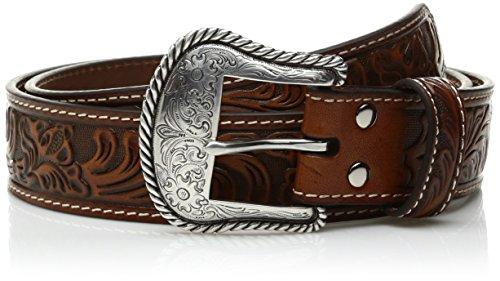
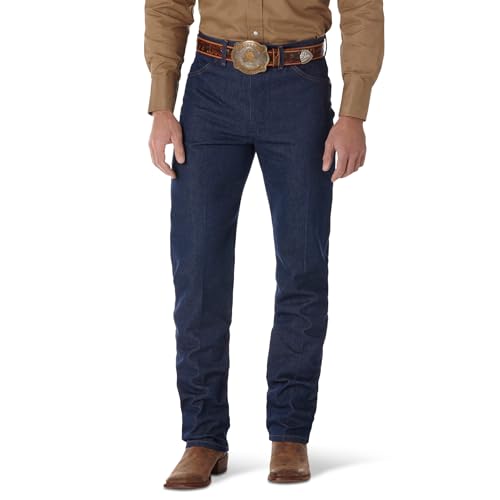
Wrangler Cowboy Cut 13MWZ
For the jean cowboy boots were designed around.
#ad - price checked on Amazon at the time you click. Last price check: November 28, 2026. How we are funded
What buy-it-for-life actually costs
Run the arithmetic before you spend. At the list prices on the makers' own pages, the Wrangler work shirts sit in the forties and the Pendleton Canyon in the high one-hundreds - roughly four work shirts for one wool shirt. If the wool shirt lasts fifteen years of occasional wear and a work shirt lasts five of regular wear, the cost per year is close enough that the decision is not financial. It is about which you will actually reach for. Buy the wool shirt because you want a wool shirt, not because you have calculated your way to it - and if your problem is summer rather than winter, the piece that changes how hot you actually are is the hat, which is covered in choosing a cowboy hat for hot weather.
The one place the math is unambiguous is the bottom of the market. A poly-cotton shirt that pills in two years costs more per wearable year than a 7 oz cotton shirt at twice the price, because pilling is terminal - no amount of care reverses it. That is the tier to skip, and it is the only firm rule on this page.
How to double the life of any of them
- Snap it closed before it goes in the machine. An open placket catches on everything in the drum and that is what bends caps and stresses the posts.
- Cold wash, inside out, and not every wear. A western shirt worn for an evening is not dirty. Hang it and air it; two wears per wash roughly halves the laundering a shirt sees in its life.
- Hang dry, always. Heat is what separates collar interlining, shrinks cotton and pills polyester. A dryer does more damage to a shirt than a year of wearing it.
- Press around the snaps, never over them. An iron plate on a pearlized cap scars it permanently. Work the yokes, collar and cuffs - the parts people look at - and leave the placket alone.
- Rotate two shirts rather than wearing one. Fabric recovers between wears. Two shirts in rotation last considerably more than twice as long as one worn constantly.
- Store on a hanger with the top snap closed, and if it is wool, store it clean with cedar. Moths are attracted to body oils in the fabric, not to the wool itself.
Fabric weights, fiber contents and construction details above are the published figures from the makers' and their retailers' own listings, linked in Sources. We have not tested any of these shirts for abrasion or wash durability, and no independent testing of western shirts exists to cite.
Which one to buy
- Most years per dollar - the Wrangler Authentic Cowboy Cut firm-finish work shirt. A published 7.25 oz of 100% cotton twill at a work-shirt price is the best durability value in western wear, and it has been in production long enough to be replaceable.
- You want it to age well, not just survive - the denim version of the same shirt. Identical construction, and indigo fades into something that looks better at year five than year one.
- One shirt, the rest of your life, cold climate - the Pendleton Canyon. Wool, machine washable, woven in the brand's own mills, and the pattern stays in production.
- Durable but you need it to look modern - the Wrangler Retro Premium. Cotton on most solid colorways in a trimmer cut; size up if you are broad through the shoulders, as several retailers describe the cut as running small.
- Durable enough and dressy - an Ariat western snap shirt. Nicer fabric and a closer fit than the work tier, and the honest trade is that softer finer cloth does not outlast heavy twill.
If you are still assembling the basics rather than upgrading one piece, start with the western starter kit for the order of purchase, and what a pearl snap shirt actually is for the anatomy of the style.
Common questions
Which pearl snap shirt brand lasts the longest?
Judged on published specifications rather than reputation, Wrangler's Authentic Cowboy Cut work shirts are the durability value - 100% cotton in a 7.25 oz twill at a work-shirt price. Pendleton's snap-front Canyon shirt in machine-washable Umatilla wool is the longest-lived option overall, at roughly four times the price.
What fabric weight should a durable western shirt be?
Around 7 oz or more per square yard. Wrangler publishes 7.25 oz for the firm-finish Cowboy Cut twill, against 4.9 oz for its chambray and 4 oz for Carhartt's lightweight Montana snap-front. Anything much under 6 oz is a summer shirt rather than a decade shirt.
Are poly-cotton western shirts less durable than cotton?
In the way that matters, yes. A blend resists wrinkles and dries fast, but it pills - and once a shirt has pilled it looks finished even though the fabric is intact. Cotton and wool thin and soften instead, which looks like age rather than failure.
Why do the snaps rip out of cheap western shirts?
Because the placket is a single thin layer of fabric. A snap is a metal post crimped through cloth, and it needs a doubled, interlined placket to spread the load. Pinch the front placket before you buy: three layers is a shirt that will hold its snaps, one layer is not.
Can a pearl snap shirt be repaired?
Snaps yes, fabric sometimes. Any alterations shop can set replacement snaps, and cuffs can be turned or replaced. A snap that has torn through the placket leaves a hole that cannot be made to look right, which is why placket construction matters more than any other single detail.
Is a canvas snap shirt more durable than a western shirt?
It is heavier, but it is usually not a shirt. The heavy canvas snap-front pieces on the market are listed as shirt jacs - 7.8 oz and up in the examples we checked - which are cut as outerwear, do not tuck, and have no western yokes. The heaviest true tuckable western shirt is around 7 to 7.5 oz.
How should I wash a western shirt so it lasts?
Snapped closed, inside out, cold, and hang dried. Heat is the main enemy: it shrinks cotton, separates collar interlining and pills blends. Press the yokes and collar but never iron over the snap caps, which scars them permanently.
Sources
- Wrangler - Cowboy Cut long sleeve twill solid snap shirt (7.25 oz, 100% cotton)
- Boot Barn - Wrangler Solid Cowboy Cut firm finish long sleeve work shirt listing
- Boot Barn - Wrangler Authentic Cowboy Cut denim long sleeve work shirt (style MS70919-T)
- Pendleton - Men's snap-front western Canyon shirt (Umatilla wool)
- Carhartt - Montana Rugged Flex lightweight snap-front shirt (4 oz, 98/2)
- Schaefer Outfitter - western denim snap shirt (direct-sale reference, non-earning)
- Tecovas - Flying-T Thorn Stopper pearl snap (direct-sale reference, non-earning)
About the author
Selena H.
Selena H. is the owner and editor of Spur & Stitch. She started the site after discovering how much western-boot buying advice assumes you already know what a welt is. Every guide here is written for the person buying their first pair.
Read next
Western wear
The best affordable pearl snap shirts
Six cheap pearl snaps that still have the right details, and what budget western shirts cut to hit the price.
Western wear
The best pearl snap shirts
The details that make a western shirt read correctly, and which pearl snaps to buy first.
Western wear
What is a pearl snap shirt?
Where pearl snaps came from, and what makes a shirt western rather than just checked.
Western wear
The best western shirts for men
Which western shirt for work, for a concert and for a wedding - fabric, fit and finish.
Western wear
The western starter kit
Five pieces in buying order, with an honest note on which you can skip.