Reference
Cowboy boot heel types and heights
The heel decides how the boot walks. It is the feature beginners notice last and feel first.
By Selena H. · Updated October 13, 2026
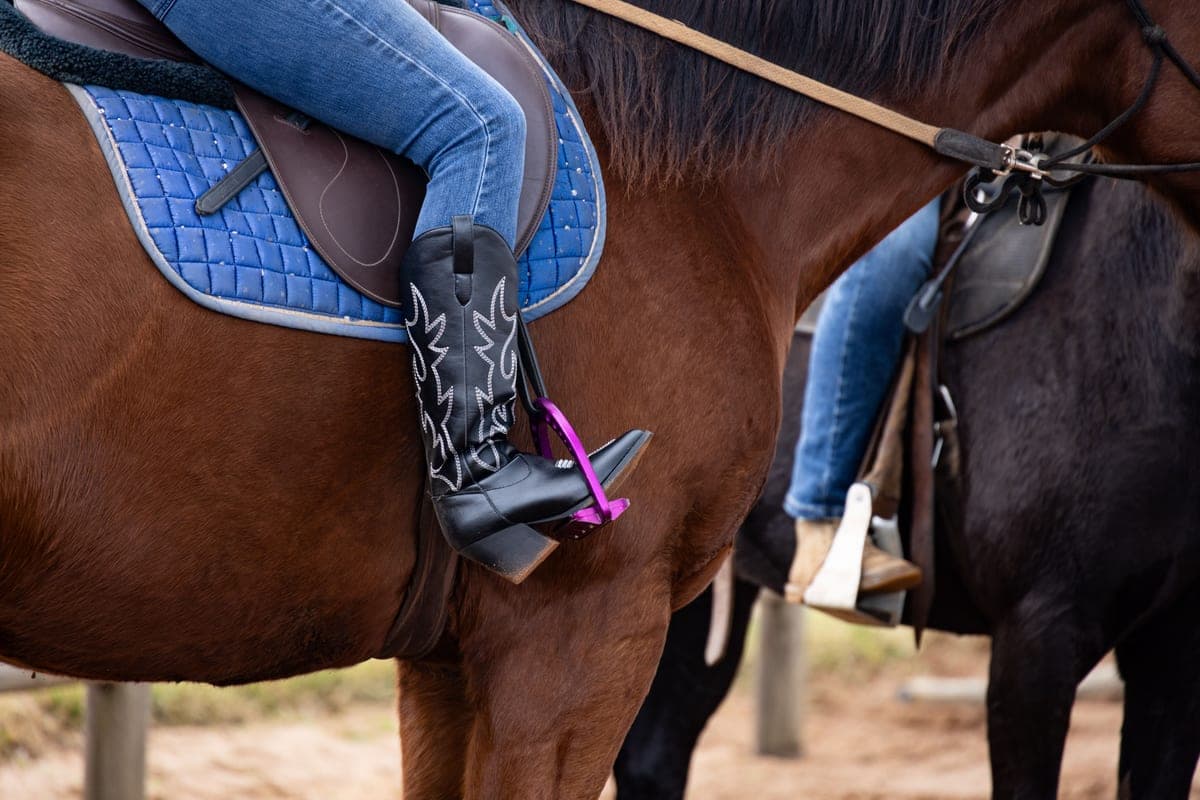
Heel height is the single biggest comfort variable in a western boot. Under 1.5 inches - roper, walking, rocker - for walking and standing. About 2 inches, angled - the riding heel - if you ride, or if the classic silhouette is the point. Everything above two inches is a short-evening boot.
| Heel | Height | Shape | Built for |
|---|---|---|---|
| Roper / walking | About 1 in | Straight, broad | Walking and standing; the easiest heel to learn in |
| Rocker | About 1.5 in | Curved underfoot | Long days - it rolls the step forward |
| Stockman | 1.25-1.5 in | Broad, slightly angled | Ranch work; a stable middle ground |
| Riding / cowboy | About 2 in | Angled, undercut | Holding and releasing a stirrup |
| Fashion / stacked | 2 in and up | Narrow, often stacked leather | Looks; not for long days |
What the riding heel is actually for
The angled, undercut riding heel exists for one job: to stop your foot sliding forward through a stirrup, and to let it come out cleanly if you fall. That is a genuine safety feature and the reason the shape exists at all. If you do not ride, it is doing nothing for you except tipping your weight forward onto the ball of your foot - which is exactly the thing people describe when they say cowboy boots hurt.
Why the rocker heel is underrated
A rocker heel is curved underneath so the step rolls through rather than landing flat. Durango publishes a 1.5-inch rocker heel on the Rebel, and it is the main reason that boot keeps appearing in our standing-all-day picks. For anybody who is upright for hours, it is the most useful heel shape in western boots and almost nobody shops for it by name.
How heel height changes your walk
Going from a flat shoe to a 2-inch riding heel shifts your weight forward and shortens your stride slightly - which is where the distinctive walk comes from. It takes a week or two to stop thinking about it. The practical consequences: more pressure on the ball of the foot, more work for the calf, and considerably less stability on uneven ground. On grass, gravel or a crowded standing-room floor, a lower heel is not just more comfortable, it is safer.
Choosing by what you will do
- Riding - angled riding heel, about 2 in. Nothing else is correct.
- Standing all day - rocker or roper heel, under 1.5 in.
- Concerts and festivals - under 1.5 in, on grass or gravel especially.
- Dancing - 1 to 2 in; you want enough heel for posture and not so much that turns get precarious.
- Weddings and dinners - up to 2 in is fine; you will be seated for part of it.
Boots across the heel range
A walking heel, a rocker heel, a classic riding heel and a dressier stacked one.
These links go to Amazon and we earn a commission if you buy. How we pick.
 Illustrative photo
Ariat Heritage Roper
For anyone who does not want a tall shaft or a tall heel.
 Illustrative photo
Ariat Heritage Roughstock
For the safest first pair for most men.
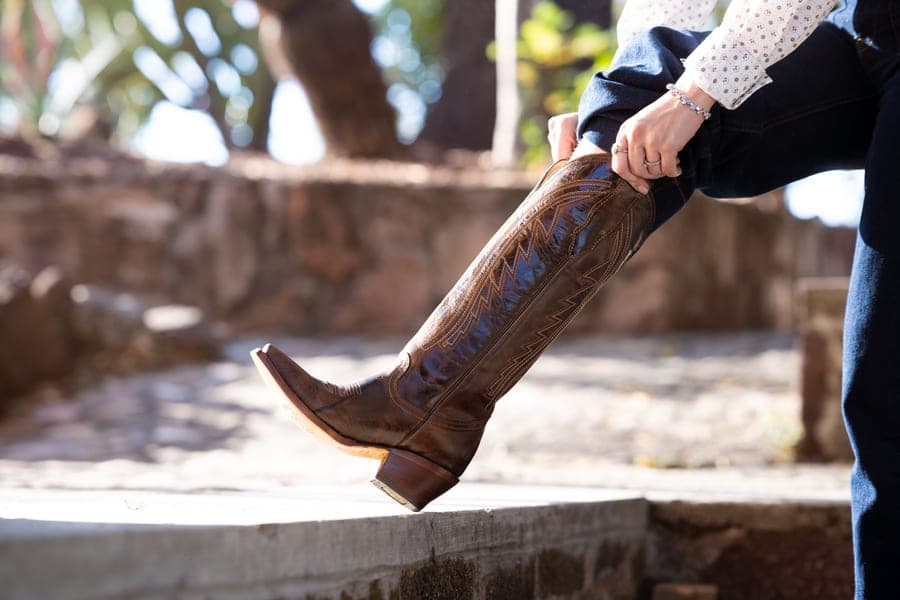 Illustrative photo
Corral Embroidered Western Boot
For the pair you want photographed.
#ad - price checked on Amazon at the time you click. Last price check: October 13, 2026. How we are funded
Common questions
What is a standard cowboy boot heel height?
About two inches for a traditional riding heel, and about one inch for a roper or walking heel. Most mainstream western boots sit between those two figures.
Are high heels on cowboy boots uncomfortable?
Over about two inches, for long periods, yes - the height concentrates pressure on the ball of the foot and reduces stability on uneven ground. Under 1.5 inches is far easier for a full day.
What is a rocker heel?
A heel curved underneath so that your step rolls forward through the stride instead of landing flat. It noticeably reduces fatigue over a long day and is the shape to look for if you stand for a living.
Why do cowboy boots have angled heels?
To stop the foot sliding forward through a stirrup, and to release cleanly in a fall. It is a riding safety feature, which is why it offers no benefit to someone who does not ride.
Which heel is best for walking?
A roper or walking heel of about an inch, or a rocker heel. Both keep your weight distributed rather than tipping it forward, and both require far less adjustment from normal shoes.
Sources
About the author
Selena H.
Selena H. is the owner and editor of Spur & Stitch. She started the site after discovering how much western-boot buying advice assumes you already know what a welt is. Every guide here is written for the person buying their first pair.
Read next
Boots
Cowboy boots vs ropers
Shaft height and heel height are the whole difference - and they change how the boot walks.
Boots
The best cowboy boots for standing all day
Five boots built for long days upright, and the three features that actually cut fatigue.
Boots
Why do cowboy boots have heels?
The angled heel is a riding safety feature, not a style choice - and whether you need one.

Boots
The parts of a cowboy boot
Vamp, shaft, welt, counter, shank, pull straps - every part named and explained.