Boots
Why do cowboy boots have heels?
It is a safety feature from a time when everybody who wore them rode. Here is what it actually does.
By Selena H. · Updated October 13, 2026
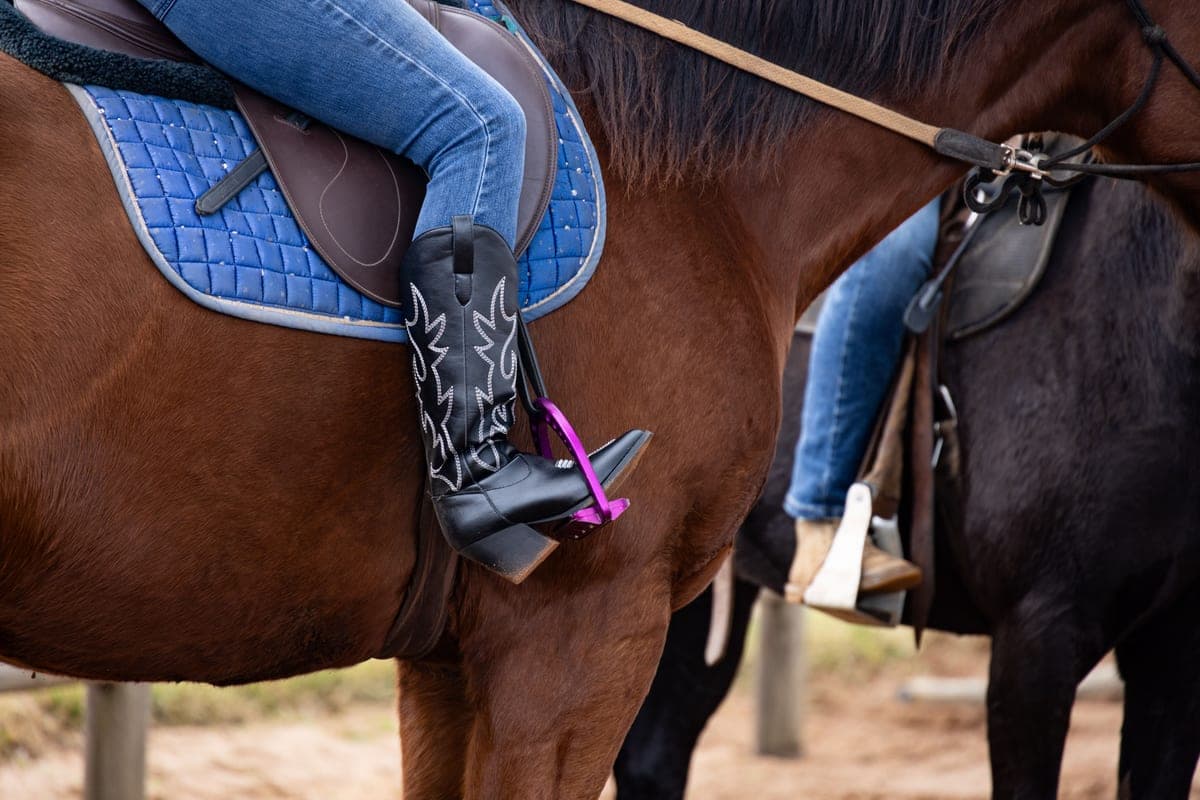
The angled, undercut heel on a cowboy boot stops your foot sliding forward through a stirrup, and lets it pull free cleanly if you come off the horse. It is a safety feature. Every other explanation - height, posture, the walk - is a side effect.
The stirrup problem
A stirrup is an open ring. A flat-soled shoe can slide straight through it, and a rider dragged by a trapped foot is the single most dangerous thing that can happen on a horse. The heel acts as a stop: your foot goes in until the heel catches the stirrup, and no further. The undercut - the backward angle - means that when you need to get out, the heel disengages rather than hooking.
The side effects, which are what you will actually notice
- Posture. A 2-inch heel tips your pelvis forward slightly, which is where the upright western stance comes from.
- The walk. Weight moves onto the ball of the foot and the stride shortens a little. It takes a week or two to stop noticing.
- Pressure. All of that weight now sits on a smaller area, which is why a tall heel is tiring for a long day on your feet.
- Stability. A narrower heel on uneven ground is less stable than a flat sole. Relevant at festivals, on grass and on gravel.
Do you need one?
Only if you ride. If you do not, the honest answer is that a roper or walking heel of about an inch is more comfortable, more stable and easier to learn in - and still unmistakably a western boot. The classic silhouette is a real reason to want the tall heel; needing it is not. See cowboy boot heel types for the full range.
What about the shank?
The same riding logic produced the other thing people notice about western boots: the steel or composite shank running under the arch. It supports the foot against the pressure of standing in a stirrup, and it is why western boots have a firmer arch than almost any other footwear. Some people find that supportive and some find it intrusive - it is the main reason opinions about boot comfort diverge so sharply.
The two heel options for a first pair
A classic riding heel and a low walking heel in the same construction, so you can see what the heel alone changes.
These links go to Amazon and we earn a commission if you buy. How we pick.
 Illustrative photo
Ariat Heritage Roughstock
For the safest first pair for most men.
 Illustrative photo
Ariat Heritage Roper
For anyone who does not want a tall shaft or a tall heel.
#ad - price checked on Amazon at the time you click. Last price check: October 13, 2026. How we are funded
Common questions
Why do cowboy boots have a raised heel?
To stop the foot sliding forward through a stirrup and to release cleanly in a fall. It is a riding safety feature; the posture and the distinctive walk are side effects.
Do you need a heel if you do not ride?
No. A roper or walking heel of about an inch is more comfortable and more stable for anyone who is not riding, and still looks western.
Why is the heel angled backwards?
The undercut means that when a rider needs to pull free of a stirrup, the heel disengages rather than catching. A straight-sided heel is more likely to hook.
Does the heel change how you walk?
Yes. It moves weight forward onto the ball of the foot and slightly shortens the stride. Most people adjust within a week or two of regular wear.
Why are cowboy boots so stiff in the arch?
A steel or composite shank runs under the arch to support the foot against stirrup pressure. It gives western boots a notably firm arch, which some wearers find supportive and others find too rigid.
About the author
Selena H.
Selena H. is the owner and editor of Spur & Stitch. She started the site after discovering how much western-boot buying advice assumes you already know what a welt is. Every guide here is written for the person buying their first pair.
Read next
Boots
Cowboy boot heel types and heights
Riding, walking, roper, stockman and rocker heels - what each does to comfort and balance.
Boots
The parts of a cowboy boot
Vamp, shaft, welt, counter, shank, pull straps - every part named and explained.
Boots
Are cowboy boots comfortable?
An honest answer - what decides boot comfort for your foot, and how to improve the odds.
Boots
Cowboy boots vs ropers
Shaft height and heel height are the whole difference - and they change how the boot walks.