Boots
Tony Lama boots: what they make and who they fit
The El Paso brand with the dressiest proportions in the mainstream - and the one most likely to be too narrow for you.
By Selena H. · Updated October 17, 2026
Spur & Stitch is reader-funded. As an Amazon Associate we earn from qualifying purchases - at no extra cost to you. Affiliate disclosure
We choose picks by comparing published specifications, construction, sizing guidance and aggregated owner feedback. We have not worn these boots ourselves. How we pick
Tony Lama is the brand to look at when you want a western boot that reads as dress footwear. Its lasts are narrower and more upright than the square-toe mainstream, which is exactly why a Tony Lama works under a suit trouser and a wide square toe does not - and exactly why it is the wrong brand to order blind if your feet are wide.
The company was founded in El Paso, Texas in 1911 and has been making boots there for over a century. It was sold to Justin Industries in 1990 and today sits inside Justin Brands, which means Tony Lama, Justin, Nocona and Chippewa are stablemates. That matters practically: if a Tony Lama shape nearly fits you, the sister brands are the first place to look for the same proportions in a different width.
Where Tony Lama sits in the market
| Tier | Brands | What you get |
|---|---|---|
| Entry | Laredo, Smoky Mountain | A real leather boot at the lowest cost of entry; replace rather than resole |
| Mid | Ariat, Durango, Dan Post, Justin | Welted construction, published specs, cushioned footbeds, wide size ranges |
| Upper mid | Tony Lama | Dressier proportions, better finishing, a narrower and more traditional last |
| Bench-made | Small makers and custom shops | Measured fit, hand-lasted construction, long waits and high prices |
The fit question, which is the whole question
Tony Lama's last is narrower through the ball and the toe box than Ariat's or Durango's. If you normally wear a D width without thinking about it, that is usually fine. If you have ever found a boot tight across the front of the foot, this is the brand where you should buy a width up rather than a size up - length does not fix a width problem, it just adds a space your foot slides into. Cowboy boot width letters explains how the letters work, and do cowboy boots run big or small covers how the brands differ from one another.
Why the proportions matter more than the leather
Two boots can use the same leather and look completely different because of the toe, the heel and the shaft. Tony Lama's mainstream shapes keep the toe narrow and the heel slim, with shafts that run tall - the Bonham is listed at 13 inches. A tall shaft keeps a bootcut trouser falling straight instead of bunching at the ankle, which is the single detail that makes a boot look deliberate with tailoring. A wide square toe, by contrast, visually shortens the leg and reads as workwear, however good it is. If the boot is for weddings, concerts in a jacket or a smarter office, the narrower shape is doing real work. Cowboy boot toe shapes is the full version of that argument.
Pick 1
Tony Lama Bonham - best for a dressier traditional boot with a tall shaft
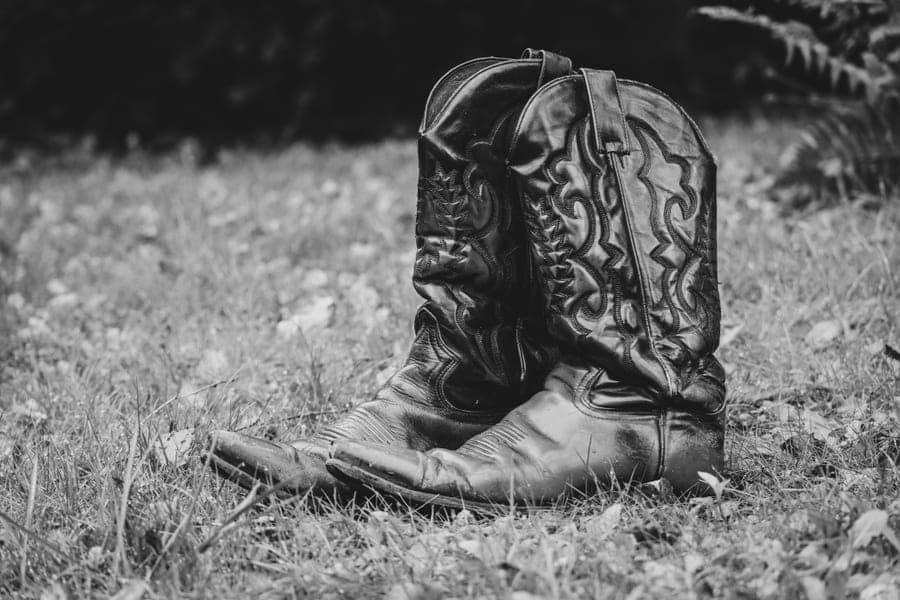
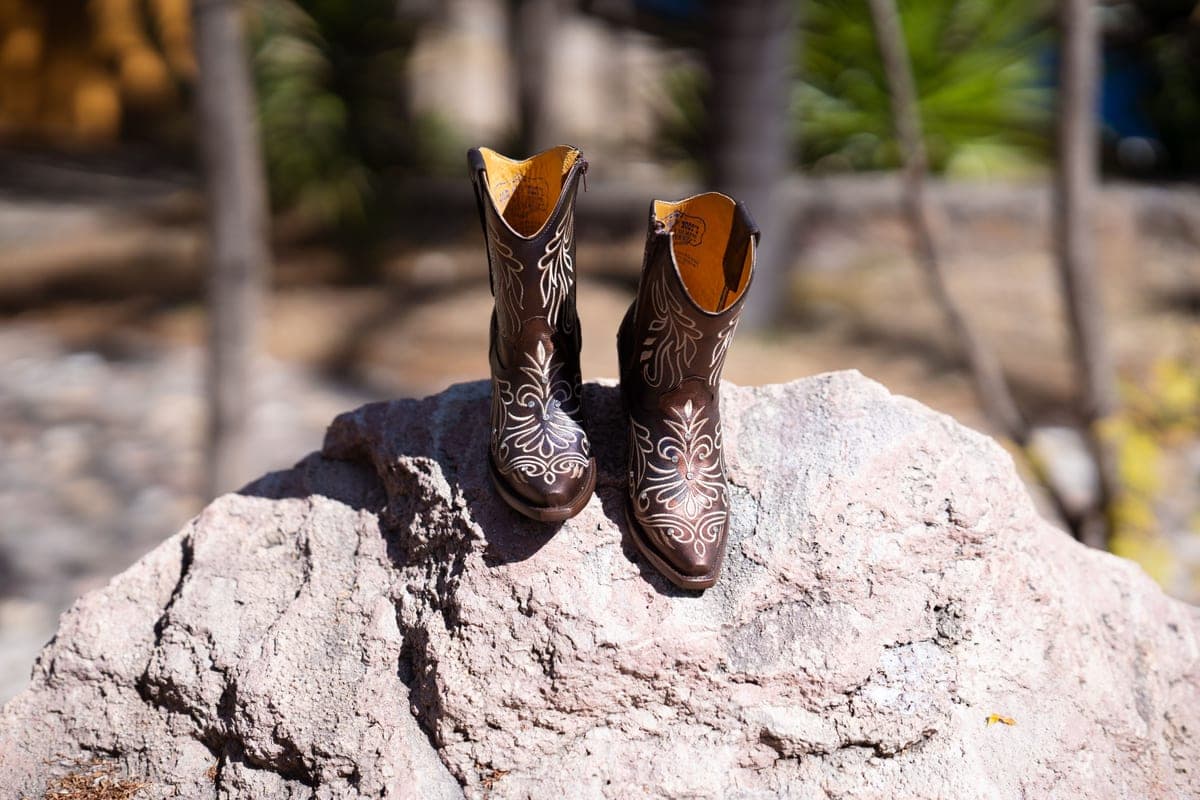
Illustrative photoTony Lama sits in the slot between the mid-market brands and the handmade tier, and the Bonham is its cushion-comfort everyday boot, listed at a 13-inch height. The reason to put it on a beginner's list is the proportion: Tony Lama's shapes are narrower and more upright than the square-toe mainstream, so a boot like this works with a dress trouser in a way a wide square toe never will. If the occasion you are buying for is a wedding or a night out rather than a fairground, start here and in Justin's Bent Rail rather than in the sport lines.
What you give up: You give up toe-box room and cost. The narrower last is unforgiving if your foot is wide, and the price sits above the entry brands.
Good
- Dressier proportions
- Tall shaft
- Step up in finish
Less good
- Tight for wide feet
- Higher price than entry brands
| Shaft | 13 in (per Tony Lama) |
|---|---|
| Fit | Narrower, more upright last |
| Insole | Cushion comfort |
| Upper | Leather |
Pick 2
Justin Bent Rail - best for a first pair you can wear to a wedding
 Illustrative photo
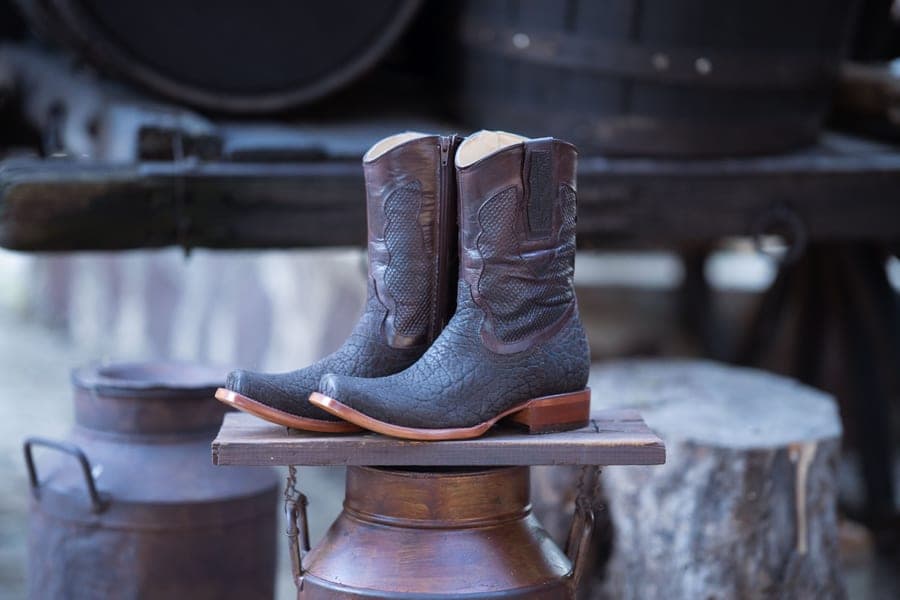
Justin's Bent Rail collection is the answer to a question beginners ask constantly: which cowboy boot does not look like a work boot. Justin publishes a leather upper over a leather outsole with a double-stitched welt, an 11-inch boot height, a broad square toe and its J-Flex insole. The leather outsole is the part that matters for dressing up - it is thinner and quieter than rubber, it takes a shine, and it is why this boot reads as footwear rather than equipment. The broad square toe keeps it comfortable despite that. Justin states the line is handcrafted in the USA with globally sourced materials, which is unusual at this price.
What you give up: You give up wet-weather confidence and grip. A leather sole is slick on tile and wet pavement until it wears in, and it is not what you want for a muddy field.
Good
- Dressy leather sole at a mid price
- Broad square toe is roomy
- Resoleable welt
Less good
- Slick on smooth and wet surfaces
- Leather sole needs protecting
| Toe | Broad square |
|---|---|
| Height | 11 in (per Justin) |
| Outsole | Leather, double-stitched welt |
| Insole | J-Flex Flexible Comfort System |
| Made | USA with globally sourced materials |
Pick 3
Dan Post Milwaukee - best for a classic stitched boot with an orthotic insole
Illustrative photoThe Milwaukee is the Dan Post boot most people mean when they say Dan Post: classic western stitching on the shaft, a cowboy heel, and the brand's Soft Strike removable orthotic insole. The removable insole is the practical reason to care. If you wear your own orthotic or need more arch support than a boot comes with, a removable footbed is the difference between a boot that works and a boot that sits in the closet - and most boots in this price band are glued in. Dan Post's shapes run more traditional than Ariat's, so if you have been looking at square toes and finding them clumsy, this is the alternative to try.
What you give up: You give up modern cushioning technology. This is a conventional boot with a good insole, not an engineered comfort system.
Good
- Removable insole takes your own orthotic
- Traditional lines
- Well-known, easy to find
Less good
- Cowboy heel needs more break-in
- Less cushioning than sport lines
| Toe | Traditional / pointed and square options |
|---|---|
| Insole | Soft Strike removable orthotic |
| Heel | Cowboy heel |
| Upper | Leather, western stitch pattern |
Pick 4
Ariat Heritage Roughstock - best for the safest first pair for most men
 Illustrative photo
If you want one boot that will not be a mistake, this is the one most first-time buyers end up in. Ariat publishes a full-grain leather upper, Goodyear welt construction, a 12-inch shaft and a 2-inch western heel, with its Duratread outsole and a removable Pro Performance insole. The reason it suits a beginner is the combination: the welt means it can be resoled instead of thrown away, and the cushioned removable insole means it is wearable on day one rather than after a month of pain. It is sold in a square toe and in narrower shapes, so you can pick the toe that fits your foot rather than taking whatever the model comes in. At the usual street price it sits in the middle of the market - above the mall-brand boots that are glued together, below the handmade tier you do not need yet.
What you give up: You give up character. This is the Toyota Camry of cowboy boots - nobody in a boot shop will be impressed, and the leather will not develop the patina a $400 calfskin boot does.
Good
- Resoleable welt at a mid-market price
- Removable cushioned insole - comfortable from day one
- Sold in several toe shapes and widths
Less good
- Visually unremarkable
- Rubber outsole is not traditional
| Toe | Square (narrower shapes also sold) |
|---|---|
| Shaft | 12 in (per Ariat) |
| Heel | 2 in western |
| Upper | Full-grain leather |
| Construction | Goodyear welt - resoleable |
| Outsole | Duratread (Ariat's rubber compound) |
#ad - price checked on Amazon at the time you click. Last price check: October 13, 2026. How we are funded
Where Tony Lama is beaten
- On width. Ariat's sport and wide square lines, and Durango's broader shapes, give far more room across the front for the same money.
- On comfort out of the box. The engineered comfort boots - Twisted X, Ariat's sport lines - are in a different category for day-one wearability. A traditional last takes a real break-in.
- On price at the bottom. For an occasional-wear boot, Laredo and Durango's entry models cost meaningfully less.
- On decoration. If you want a boot people ask about, Corral's inlay and overlay work is the reference point - see the Corral boots guide.
Who should buy a Tony Lama
- You want one boot that works with tailoring. This is the strongest case. A narrow toe and a tall shaft under a trouser is the look that other western boots cannot do.
- You know your width and it is standard or narrow. The last rewards a normal-width foot and punishes a wide one.
- You already own a comfortable casual boot and want the dressier second pair rather than the only pair.
- You like traditional construction and are willing to break a boot in properly rather than expecting day-one comfort.
What a dressier boot needs
A leather-soled dress boot wants grip before it meets wet pavement, conditioner to keep the finish, and trees to hold a tall shaft.
These links go to Amazon and we earn a commission if you buy. How we pick.
 Illustrative photo
Rubber Half-Sole Protectors
For making a leather sole safe and last.
 Illustrative photo
Bickmore Bick 4 Leather Conditioner
For the one conditioner to own.
#ad - price checked on Amazon at the time you click. Last price check: October 13, 2026. How we are funded
Breaking one in
A traditional last with a narrower toe box needs the full break-in rather than a weekend of it: short sessions indoors with the socks you will actually wear, building up over a week or two, and a conditioner on the flex points once the leather starts to crease. Do not soak a boot or use heat on it - both are folk remedies that damage leather. The method is in how to break in cowboy boots, and if one specific spot is tight after two weeks, a stretcher placed on that spot is the right tool.
Common questions
Are Tony Lama boots good quality?
They sit in the upper-middle of the mainstream - better finished and more traditionally proportioned than most mid-market boots, below bench-made and custom work. The brand has made boots in El Paso since 1911 and is now part of Justin Brands.
Do Tony Lama boots run true to size?
Length is usually close to a street shoe size; width is the issue. The last is narrower through the ball and toe box than Ariat's or Durango's, so order a wider width rather than a longer boot if you have found other boots tight across the front.
Who owns Tony Lama?
Tony Lama was sold to Justin Industries in 1990 and is now a division of Justin Brands, a Berkshire Hathaway company. Justin, Nocona and Chippewa are stablemates under the same group.
Are Tony Lama boots made in the USA?
The brand was founded and has long been produced in El Paso, Texas, and some lines are still made there, but production varies by model. Check the individual product description for the specific boot you are buying rather than assuming it from the brand.
Tony Lama or Justin - which should I buy?
Justin for a broader toe and a slightly lower price, Tony Lama for a narrower and dressier shape. They are sister brands in the same group, so if one nearly fits, the other is the first place to look for the same idea in a different last.
Sources
About the author
Selena H.
Selena H. is the owner and editor of Spur & Stitch. She started the site after discovering how much western-boot buying advice assumes you already know what a welt is. Every guide here is written for the person buying their first pair.
Read next
Boots
The best cowboy boot brands, and what each one is good at
What each western boot brand is actually good at, who it fits, and where it sits on price.
Boots
Justin Boots: what they make and who they fit
How Justin's lines differ, and why a leather-soled Justin is the easiest boot to dress up.
Boots
Corral boots: what they make and who they fit
What Corral makes, how its decorated boots wear in real life, and who should buy a pair first.
Boots
Cowboy boot toe shapes, explained
All seven western toe shapes, what each does to fit and formality, and which suits your foot.
Fit & sizing
Do cowboy boots run big or small?
How western sizing compares to street shoes, and how much brands actually vary.