Fit problem
The best cowboy boots for wide calves
The boot fits your foot and stops dead at the calf. That is a published specification problem, not a sizing problem, and it has four real fixes.
By Selena H. · Updated October 28, 2026
Spur & Stitch is reader-funded. As an Amazon Associate we earn from qualifying purchases - at no extra cost to you. Affiliate disclosure
We choose picks by comparing published specifications, construction, sizing guidance and aggregated owner feedback. We have not worn these boots ourselves. How we pick
There is a specific, demoralizing moment this page exists for. The boot slides on, the foot sits perfectly, and then the shaft stops - wedged across the widest part of your calf with two inches still to go. Nothing about your foot size is wrong. You are up against a number the listing probably did not print.
Measure the widest part of your calf first. Around 15 to 16 inches is what the industry calls a wide calf; 17 inches and up is extra wide. Then buy a boot that advertises calf fit rather than one that only lists shaft height - the Ariat Heritage X Toe Elastic Wide Calf is the clearest example, and the Heritage R Toe StretchFit is the plainer, more versatile version of the same idea. If neither fits, a short-shaft boot like the Ariat Fatbaby sidesteps the problem completely.
Shaft height is on almost every listing. Shaft circumference is on almost none of them, which is why wide-calf shopping feels like guesswork - you are buying the one dimension that decides the outcome, blind. The boots below either publish calf-fit information or are built so the question does not arise.
Quick picks
Tap any row to jump to the full write-up. The price column goes straight to Amazon.
| # | Product | Best for | Price |
|---|---|---|---|
| 1 | 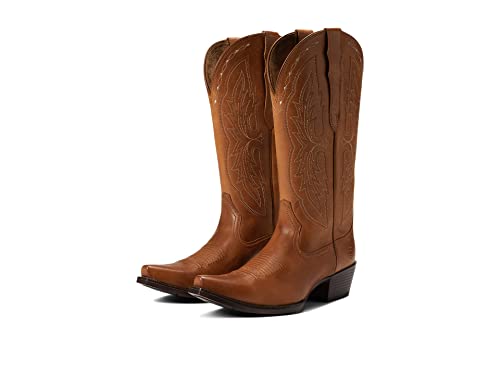 Ariat Heritage X Toe Elastic Wide CalfYou give up choice. | a tall western boot that actually closes around a wide calf | |
| 2 | 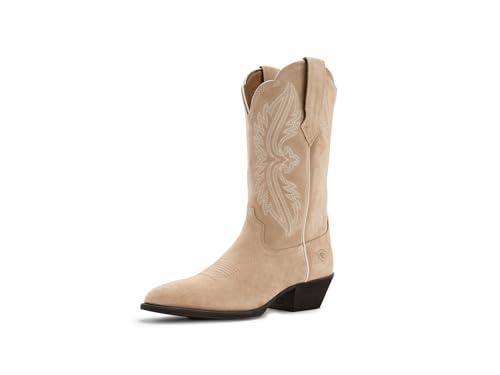 Ariat Heritage R Toe StretchFitYou give up decoration entirely. | a wider calf in the plainest, most wearable Heritage shape | |
| 3 | 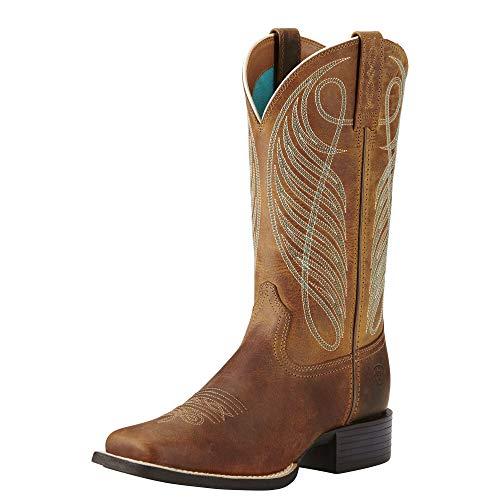 Ariat Women's Round Up Wide Square ToeYou give up toe profile. | women who ride and do not want a second pair for town | |
| 4 | 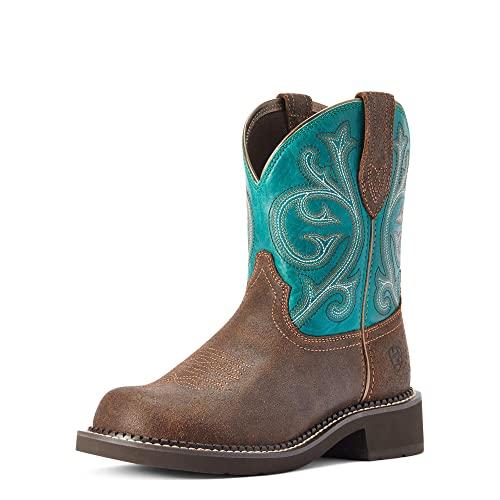 Ariat Fatbaby HeritageYou give up the classic look entirely. | a short shaft and no break-in at all | |
| 5 | 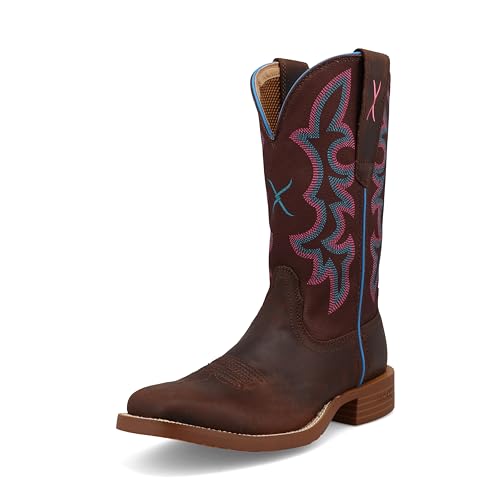 Twisted X Women's 11" Tech XYou give up tradition and decoration. | women who need to stand all day in something western | |
| 6 | 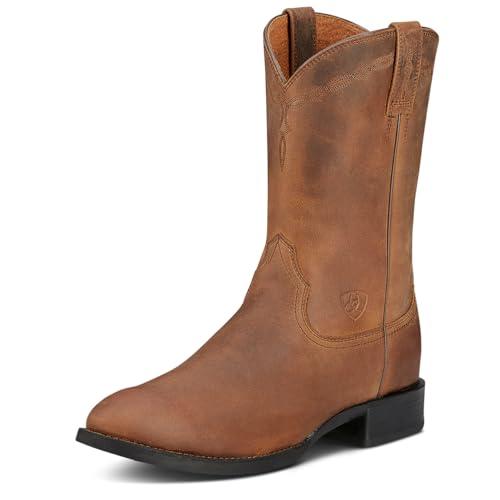 Ariat Heritage RoperYou give up the silhouette. | anyone who does not want a tall shaft or a tall heel |
#ad - price checked on Amazon at the time you click. Last price check: November 28, 2026. How we are funded
Measure your calf first - it takes thirty seconds
- Put on the socks, and the jeans, you will actually wear the boots with. Both add real circumference at the point where a shaft binds.
- Wrap a soft tape around the widest point of the calf, which for most people is about a third of the way up from the ankle.
- Keep the tape snug but not pulled tight. You want the measurement, not a tourniquet.
- Measure both legs. They are usually not identical, and the boot has to clear the bigger one.
- Add about an inch for comfort, then shop against that number. Ariat's own guidance puts wide-calf boots at roughly 15 to 16 inches of calf and extra-wide at about 17 inches and up.
One more thing worth knowing before you order: calf width and foot width are separate problems with separate solutions. A wider width letter gives your foot room and does nothing at all for your calf. If the pinch is across the ball of your foot rather than up the shaft, you are on the wrong page - the best cowboy boots for wide feet is the one you want, and what the width letters mean explains why the two never overlap.
How we picked
We have not worn these boots and we are not going to pretend otherwise - every specification below is what the maker or the retailer publishes, which on this particular problem is the thing that actually matters. Our method is on how we pick. Three criteria decided the list:
- Calf fit has to be designed in, not hoped for. Either the model is sold as a wide-calf style, or it carries stretch panels the maker describes, or the shaft is short enough that calf width is irrelevant.
- The boot still has to look like a western boot. A tall shaft is the whole point of the silhouette. Solving the fit by buying an ankle boot is a real option, and it is on the list, but it is the last resort rather than the headline.
- It has to be a current model from a brand with predictable sizing. Wide-calf shopping already involves one unknown. It should not involve two.
Pick 1
Ariat Heritage X Toe Elastic Wide Calf - best for a tall western boot that actually closes around a wide calf
This is the rare western boot that treats calf width as a published specification rather than something you find out after it arrives. Ariat lists a 13-inch shaft, a 1.75-inch heel and its X toe, and the model exists specifically as the wide-calf version of the Heritage line - the retailer listings carry "wide calf" in the product name, which is the detail that matters when you are ordering blind. Ariat describes StretchFit panels hidden under the pull tabs that expand up to an extra inch, so the shaft gives where your calf is widest instead of stopping halfway up. A 13-inch shaft is a proper western silhouette, not a compromise bootie, so you are not trading the look away to get the fit. If you have measured your calf at roughly 15 inches or more and every tall boot you have tried has caught at the top, start here rather than hunting for a wider size in a standard shaft.
What you give up: You give up choice. Ariat's wide-calf run is a handful of colorways rather than a full line, and stock in any one color and size moves - if you find your size you buy it, you do not think about it for a week.
Good
- Calf width is an advertised feature, not a guess
- Full 13-inch shaft keeps the classic silhouette
- Stretch panels sit hidden under the pull tabs
Less good
- Limited colorways
- Stock in a given size comes and goes
- Above the budget tier on price
| Shaft | 13 in (per Ariat listings) |
|---|---|
| Heel | 1.75 in |
| Toe | X toe |
| Calf fit | StretchFit panels, up to +1 in per Ariat |
| Upper | Leather |
Pick 2
Ariat Heritage R Toe StretchFit - best for a wider calf in the plainest, most wearable Heritage shape
Ariat's own wide-calf buying guide names this boot first, and the reason is that it solves the calf problem inside the shape most women want anyway. The R toe is the rounded, slightly squared-off profile that goes with jeans, with a dress and to a wedding without reading as either costume or workwear, and the StretchFit construction puts give exactly where a standard shaft fails - Ariat describes panels under the pull tabs that expand for up to an extra inch of calf room. The rest is standard Heritage: full-grain leather upper, Ariat's cushioned removable footbed, and sizing that tracks closer to a street shoe size than almost anything else in western boots. For a first pair bought online by somebody who already knows tall boots pinch at the top, this is the lowest-risk order on the page.
What you give up: You give up decoration entirely. This is a deliberately plain boot, and if you wanted the stitched, scalloped, photographed-at-a-wedding boot, StretchFit is not offered in it.
Good
- Named in Ariat's own wide-calf guide
- The most versatile Heritage shape
- Predictable sizing for an online order
Less good
- Plain - no shaft stitching or inlay
- Stretch is about an inch, not unlimited
- Mid-market price
| Toe | R toe (rounded square) |
|---|---|
| Calf fit | StretchFit panels, up to +1 in per Ariat |
| Upper | Full-grain leather |
| Footbed | Cushioned, removable |
| Sizing | Close to street shoe size for most wearers |
Pick 3
Ariat Women's Round Up Wide Square Toe - best for women who ride and do not want a second pair for town
Ariat's own store listings put the Round Up Wide Square Toe at an 11-inch shaft with a 1.375-inch Horseman heel, and the Horseman heel is the detail that matters: it is the shape Ariat puts on its riding-oriented boots, tapered at the back so the foot cannot slide forward through a stirrup. Eleven inches of shaft is shorter than a men's riding boot and still tall enough to keep a stirrup leather off your calf through a pair of jeans. The pay-off is that it does not look like tack. It is cut as a fashion-aware boot with Ariat's cushioned footbed, so the same pair carries you from an arena to a restaurant without a change. A StretchFit version is listed at the same 11-inch shaft and 1.375-inch heel, with an elastic panel at the top of the shaft for wider calves.
What you give up: You give up toe profile. A wide square toe is the widest thing you can put in a stirrup, so in a narrow or traditional stirrup it is a worse match than Ariat's own R toe.
Good
- Riding-shaped heel in a boot that reads as fashion
- Shaft tall enough to protect the calf
- Ariat sizing is predictable
Less good
- Wide square toe is the wrong shape for a narrow stirrup
- Shorter shaft than a men's riding boot
| Shaft | 11 in (per Ariat listings) |
|---|---|
| Heel | 1.375 in Horseman |
| Toe | Wide square |
| Footbed | Cushioned |
| Variant | StretchFit version listed at the same shaft and heel |
Pick 4
Ariat Fatbaby Heritage - best for a short shaft and no break-in at all
The Fatbaby is the boot women who hate boots end up loving, and it is the most forgiving first pair on this list. Ariat lists 4LR technology for lightweight support and stability, an Everlon sole for cushioning, an 8-inch shaft, a 1.75-inch heel and the signature wide round Fatbaby toe. Everything about those numbers is beginner-friendly: an 8-inch shaft slides on without a fight and never touches your calf, the wide round toe means no pinching, and the cushioned sole means you can wear them out of the box. It is also the pair to buy if you have wide feet and have had bad luck with every other western boot.
What you give up: You give up the classic look entirely. The short shaft and wide toe read as a casual bootie, not a cowboy boot, and they will not work under a bootcut jean the way a tall shaft does.
Good
- No break-in
- Easiest shaft to get on
- Good for wide feet
Less good
- Not a traditional silhouette
- Short shaft limits jean pairings
| Toe | Wide round (Fatbaby) |
|---|---|
| Shaft | 8 in (per Ariat) |
| Heel | 1.75 in |
| Sole | Everlon cushioned |
| Support | 4LR technology |
Pick 5
Twisted X Women's 11" Tech X - best for women who need to stand all day in something western
Same engineering argument as the men's Tech X, in an 11-inch women's shaft. Twisted X publishes CellStretch comfort technology across more than 100 pressure points, a Blend85 recycled foam footbed, a nylon and glass-fiber shank and a rubber outsole with blended rice husk. If your job keeps you upright, or the event is a ten-hour festival, this is the honest recommendation over a prettier boot - and the 11-inch shaft is tall enough to still look like a western boot rather than a work shoe.
What you give up: You give up tradition and decoration. It is a plain, technical boot, and nobody will ask where you got it.
Good
- Essentially no break-in
- Built for standing
- Light
Less good
- Plain
- Not resoleable
- Technical look
| Shaft | 11 in |
|---|---|
| Comfort | CellStretch pressure-point system |
| Footbed | Blend85 recycled foam |
| Outsole | Rubber with blended rice husk |
Pick 6
Ariat Heritage Roper - best for anyone who does not want a tall shaft or a tall heel
A roper is the quiet entry point into western boots, and this is the one to start with. Ariat's Heritage Roper uses a round toe, a low walking heel and a shorter shaft than the Roughstock, which changes two things for a beginner: it is far easier to walk in on hard floors, and it disappears under a pair of jeans instead of announcing itself. If the thing stopping you buying cowboy boots is that you think you will look like you are in costume, buy a roper first. The same Ariat construction cues apply - full-grain upper, cushioned insole - and because the heel is low, the break-in period is shorter and the ankle rub most people complain about in week one is much milder.
What you give up: You give up the silhouette. A roper is not what people picture when they say cowboy boot, and it will not hold a stirrup the way a riding heel does.
Good
- Easiest western boot to walk in
- Short break-in
- Reads as a normal boot under jeans
Less good
- Not the classic cowboy silhouette
- Low heel is wrong for riding
| Toe | Round |
|---|---|
| Shaft | Short (roper cut) |
| Heel | Low walking heel |
| Upper | Full-grain leather |
| Best use | Walking, standing, everyday wear |
#ad - price checked on Amazon at the time you click. Last price check: November 28, 2026. How we are funded
The four fixes that actually work
When a shaft will not close, you have four honest options and one popular bad one.
Fix 1: buy stretch, not a bigger size
Going up a boot size to get calf room is the instinct and it is the wrong move. Boot sizes scale the foot far more than the shaft, so you gain perhaps a quarter inch at the calf and a full size of slop around your heel - and heel slip is what gives you blisters. Ariat's StretchFit models exist precisely because of this: the company describes hidden elastic panels under the pull tabs that expand for up to an extra inch of calf room, with no change to how the foot sits. An inch is not unlimited, but an inch is usually the gap.
Fix 2: buy a shorter shaft
A calf is narrow at the ankle and wide at the top. Stop the shaft before the wide part and the problem disappears. An 8-inch shaft like the Fatbaby's never reaches the widest point on most legs; an 11-inch shaft clears a lot of calves that a 13-inch shaft will not. The cost is the silhouette - a short shaft reads as a bootie and does not sit properly under a bootcut jean, which may matter to you a great deal or not at all.
Fix 3: have the shaft stretched
A cobbler with a calf stretcher can take roughly half an inch to an inch out of a leather shaft, permanently, for a fraction of the price of the boots. This is the fix for the boot you already own and love, or for the pair you found in your size in a color that is never coming back. It works on leather, it does not work on synthetic, and it is not something to attempt with a hair dryer and optimism - see do cowboy boots stretch for what leather will and will not give you.
Fix 4: have a gore panel set into the back seam
This is the one almost nobody suggests and it is frequently the best answer. A cobbler cuts the back seam of the shaft and sets an elastic gore panel into it, which adds real circumference rather than the fraction an inch a stretcher gives you - and once the boot is on, the panel is barely visible. It costs far less than a new pair, and critically it lets you buy the boot you actually want in the style you actually want rather than shopping the short list of models that happen to publish a calf measurement. Our full write-up of the option is in wide feet and wide calves.
The bad option is buying a boot that nearly closes and planning to break it in. Shaft leather does loosen with wear, but a boot that binds hard enough to leave a mark after ten minutes is not going to loosen by two inches, and in the meantime it restricts circulation. Send it back.
If the gap is small, these close it
A boot stretcher with a calf attachment buys about half an inch at home over several days, and a jack saves the heel counter you will otherwise crush getting a tight shaft off.
These links go to Amazon and we earn a commission if you buy. How we pick.
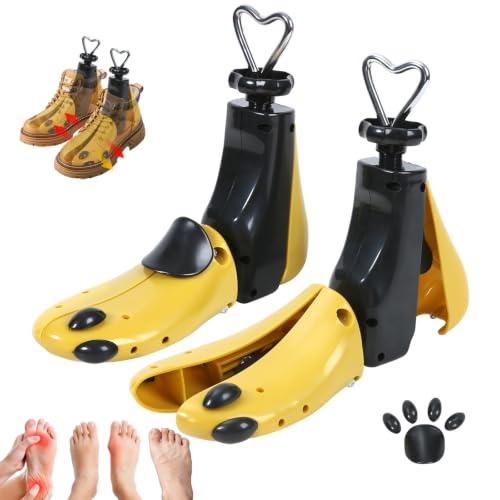
Two-Way Boot Stretcher
For a boot that is tight in one specific spot.
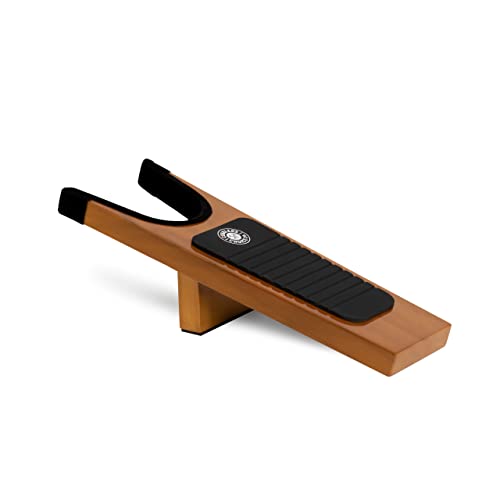
Cobbler's Choice Wooden Boot Jack
For getting boots off without wrecking them.
#ad - price checked on Amazon at the time you click. Last price check: November 28, 2026. How we are funded
What the numbers mean when a listing does print them
| Calf measurement | What to shop for | What to avoid |
|---|---|---|
| Under 14 in | Standard shafts fit; you are not shopping this page | Nothing - you have the whole market |
| 14-15 in | Standard tall shafts, or a StretchFit model for comfort over jeans | Fitted dress-western shafts, which cut close |
| 15-16 in | Boots sold as wide calf, or StretchFit panels adding about an inch | Any 13 in shaft without stated stretch |
| 17 in and up | Extra-wide-calf styles, or an 8-11 in shaft, plus a cobbler stretch | Tall traditional shafts entirely - they will not close |
Men and wide calves
Men hit this less often, for a structural reason rather than a flattering one: men's western boots are generally cut with a wider shaft to begin with, because they were drawn to go over a work sock and under a jean rather than over a slim calf. When it does happen, the fix list is shorter - very few men's models advertise calf fit at all, so the realistic answers are a roper or shorter-shaft boot, or a cobbler stretch on a boot you already own. The Ariat Heritage Roper on this list is the clearest example of the first route: a low shaft, a walking heel, and no part of it that reaches the widest point of a calf. For scale, the standard men's tall boot it is the alternative to runs a 12-inch shaft - see our Ariat Heritage Roughstock review.
If you are looking at ropers for this reason, the best roper boots goes deeper on the style and cowboy boots vs ropers covers what you give up in silhouette.
Ordering online without a second return
- Shop against your measured number, not against a size. Shaft height is not shaft circumference and the two are not related.
- Read the listing for the words wide calf, elastic, gore, stretch or StretchFit. If none of them appear, assume a standard shaft.
- Try them indoors, on carpet, over the jeans or the socks you will wear with them. Boots worn outside cannot go back.
- Check the foot fit separately from the calf fit. Snug across the ball, a quarter to half inch of heel lift, toes clear of the end. Full checklist in how cowboy boots should fit.
- If the shaft binds enough to leave a red line after ten minutes indoors, return them. That is not break-in, and it will not resolve.
Everything above assumes the foot size itself is right. If you are not yet sure of that, start with the cowboy boot sizing guide and come back - calf fit is the second problem to solve, never the first.
Common questions
What counts as a wide calf for cowboy boots?
Ariat's published guidance puts wide-calf boots at roughly 15 to 16 inches of calf circumference and extra-wide styles at about 17 inches and up. Measure standing, around the widest point of the calf, over whatever you plan to wear the boots with.
Should I size up in cowboy boots to fit a wide calf?
No. Boot sizing scales the foot far more than the shaft, so going up a size adds maybe a quarter inch at the calf and a full size of looseness around your heel. Heel slip is what causes blisters. Buy a stretch or wide-calf model, or have the shaft stretched instead.
Can a cobbler stretch the shaft of a cowboy boot?
Yes, on leather. A calf stretcher can take roughly half an inch to an inch out of a leather shaft permanently, and it costs a small fraction of a new pair. It does not work on synthetic shafts, and heat-based home methods damage leather rather than stretching it.
Do cowboy boot shafts stretch on their own over time?
A little. Leather relaxes with wear and the shaft will soften and give slightly, but the movement is measured in fractions of an inch over months. A boot that will not close now is not going to close later - that is a return, not a break-in project.
What is StretchFit on Ariat boots?
Ariat's name for hidden elastic panels set under the pull tabs at the top of the shaft. The company describes them as expanding up to an extra inch to fit a wider range of calves, without changing how the boot fits the foot.
Are wide calf cowboy boots only made for women?
In practice, mostly yes - women's lines are where calf fit is advertised, because women's shafts are cut closer. Men's western boots are generally wider in the shaft already, and when a man does need more room the usual answers are a roper or shorter shaft, or a cobbler stretch.
Sources
About the author
Selena H.
Selena H. is the owner and editor of Spur & Stitch. She started the site after discovering how much western-boot buying advice assumes you already know what a welt is. Every guide here is written for the person buying their first pair.
Read next
Fit & sizing
Cowboy boots for wide feet and wide calves
Two different problems with two different answers - plus the cobbler fix nobody mentions.
Boots
The best cowboy boots for wide feet
Five boots that genuinely fit wide feet - and why a wide toe beats hunting for an EE width.

Fit & sizing
Do cowboy boots stretch?
Boots stretch in width, not length - and that asymmetry drives every sizing rule.
Boots
Cowboy boot shaft height
What 8, 11, 13 and 15-inch shafts each do under jeans - and how hard each is to pull on.
Boots
The best cowboy boots for women
Six women's western boots by situation - concerts, weddings, all-day wear, wide calves.