Model review
Ariat Heritage Roughstock review
The boot more first pairs end up being than any other. Here is what it actually is, and the three kinds of buyer who should not buy it.
By Selena H. · Updated October 28, 2026
Spur & Stitch is reader-funded. As an Amazon Associate we earn from qualifying purchases - at no extra cost to you. Affiliate disclosure

We choose picks by comparing published specifications, construction, sizing guidance and aggregated owner feedback. We have not worn these boots ourselves. How we pick
The Heritage Roughstock is the default answer to the question this whole site exists for. Ask ten people where a beginner should start in western boots and some number of them will say this boot without really explaining why. This page is the why - and the three cases where the crowd is wrong.
Buy it if this is a first or second pair, you want welted construction you can resole, and you want a boot that is comfortable the day it arrives. Do not buy it if you want a boot anyone will compliment, if you are shopping purely on price, or if the boots are for one event you will never repeat.
A disclosure before anything else: we have not worn this boot, and no page on this site will claim otherwise. What follows is built from Ariat's own published specification, from what the construction tells you about how the boot will behave, and from how it compares to the rest of the market at the price. That is a narrower claim than most review pages make and it is the honest one - how we pick sets out the method, and how to read a boot review explains why the glowing hands-on write-ups are worth less than they look.
The specification, as Ariat publishes it
| Detail | What Ariat lists |
|---|---|
| Upper | Full-grain leather foot and upper, leather lining |
| Construction | Goodyear welt - Ariat states it allows resoling |
| Shaft | 12 in on the standard square toe |
| Heel | 2 in riding heel |
| Toe | Square (other shapes sold in the same line) |
| Outsole | Duratread, described as barnyard-acid resistant |
| Footbed | ATS footbed with a removable Pro Performance insole |
| Shaft detail | Six-row stitch pattern with embroidery |
Four of those lines are doing all the work, and they are worth separating from the marketing.
What the Goodyear welt actually buys you
A welt is a strip running around the edge of the sole. The upper and insole are stitched to it, and the outsole is then stitched to the welt rather than through the upper - which means a cobbler can cut that stitching off, lift the worn sole away and stitch a new one on without touching the part of the boot that has molded to your foot. A welted boot can usually go through that three or four times.
That matters at a specific frequency and not below it. Wear boots a couple of times a month and a glued boot will outlast your interest in it. Wear them weekly and the welt is the difference between one pair resoled twice and three pairs bought and thrown away. The crossover is roughly weekly wear, which is the same line we draw in how much cowboy boots should cost. If you are honestly in the occasional-wear group, the welt on this boot is a feature you are paying for and will never use. The full picture is in boot construction explained.
The removable insole is the real beginner feature
Traditional welted boots have a reputation for a brutal first fortnight, and it is mostly deserved: a leather insole over a leather midsole is a hard, flat surface that only becomes comfortable once it has compressed to the shape of your foot. Ariat's ATS footbed and removable Pro Performance insole short-circuit that. You get a cushioned, supported footbed from the first hour, which is why this boot gets recommended to people who have never worn a western boot and have a wedding in two weeks.
The removable part matters too, and in two directions. If you use custom orthotics, there is room to drop them in - which is unusual in a welted western boot. And if the stock insole packs down after a year, it is a ten-dollar replacement rather than a dead boot. Break-in is still real on the shaft and across the vamp; it is the underfoot part that is solved. The method, which still applies here, is in how to break in cowboy boots.
Duratread, and the quiet trade it represents
Duratread is Ariat's own rubber compound, and the company describes it as barnyard-acid resistant - which is a specific, practical claim rather than a vague one. It means the sole does not degrade from standing in the kind of mess a barn floor collects, and it grips on wet concrete in a way a leather sole emphatically does not.
The trade is that it is not traditional, and in a dressy setting it reads that way. A leather outsole is thinner, quieter on a hard floor and correct with a suit; a rubber one is safer, louder and more casual. For one pair that has to cover work, weather and a night out, rubber is the right answer and this is the right boot. For a boot that exists mainly to be worn with tailoring, it is not - see leather sole vs rubber sole and cowboy boots with a suit.
Fit and sizing
Ariat's sizing is the most predictable in mainstream western boots, which is a bigger deal than it sounds when you are ordering a pull-on boot online with no laces to adjust. Most people land at their normal shoe size. The square toe on this model gives real lateral room across the front, so it tolerates a broader foot better than a snip toe in the same size - but a square toe is not a wide width, and the two solve different problems. If your whole foot feels tight rather than just the toes, you want a width letter, which the width letters explained covers.
The 12-inch shaft and 2-inch riding heel are the two numbers to check against your own plans. Twelve inches is a standard men's western shaft, tall enough to sit correctly under a bootcut jean. A 2-inch riding heel is tall, angled and built to stop a foot sliding through a stirrup - genuinely useful on a horse and a real adjustment on a hard floor if every boot you have ever owned was flat. If you are not riding and the heel worries you, the Roper version of the same Heritage line drops it to a low walking heel.
Who should not buy this boot
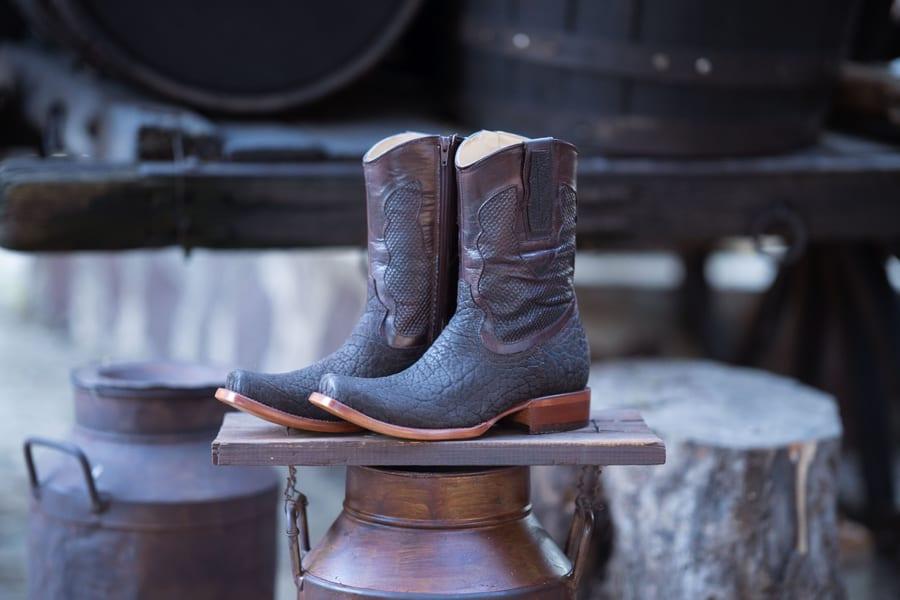
- Anyone shopping on looks. This is a deliberately plain boot. The six-row stitch pattern is the only decoration and nobody is going to ask about it. If you want the boot in the photograph, you want a decorated one - the best cowboy boots for weddings is a better starting point.
- Anyone buying for one event. The welt is the expensive part and it only pays back over years of wear. For a single concert, spend a third as much - the best cowboy boots under $200 covers that tier honestly.
- Anyone who hates a tall heel. Two inches, angled, is a real change in how you walk, and no amount of break-in alters it. The roper shape in the same line exists for exactly this person.
- Anyone who needs a dress boot. A rubber outsole and a 12-inch working shaft are not what a suit wants, whatever the leather quality.
What to compare it against
Three boots sit close enough to this one that the choice is genuinely live, and all three beat it for a specific buyer.
The three real alternatives
The roper if the heel is the problem, the Bent Rail if the occasion is dressier, and the Rebel if you are on your feet all day and do not care about resoling.
These links go to Amazon and we earn a commission if you buy. How we pick.
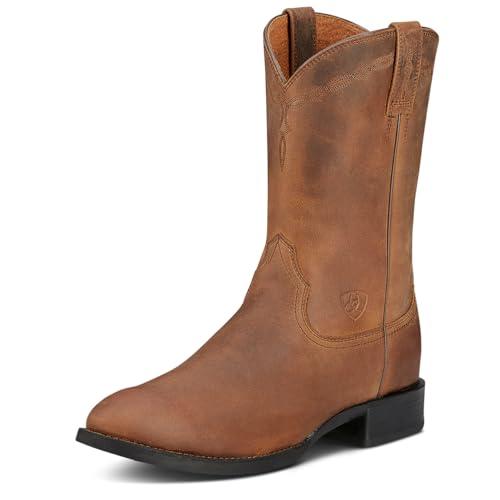
Ariat Heritage Roper
For anyone who does not want a tall shaft or a tall heel.
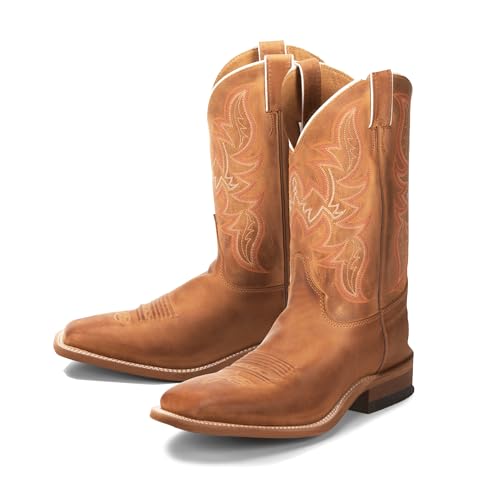
Justin Austin II Bent Rail
For a first pair you can wear to a wedding.
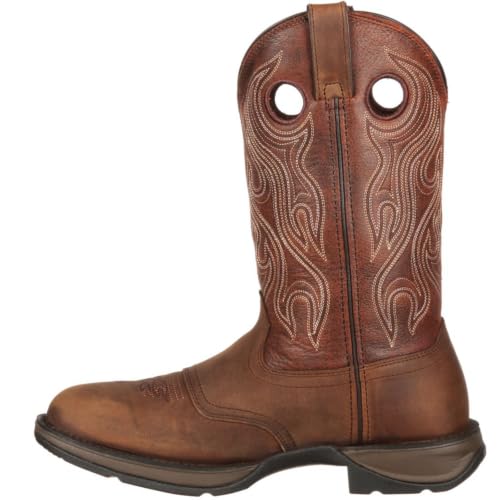
#ad - price checked on Amazon at the time you click. Last price check: November 28, 2026. How we are funded
Against the rest of the market, the comparison most people are actually running is Ariat against a direct-sold handmade brand, and the answer is not the one the forums give. Ariat vs Tecovas lays out where each one genuinely wins - and if you want the brand-level picture rather than this one model, the Ariat boots guide covers how the Heritage, Sport and work lines differ.
The verdict
The Heritage Roughstock earns its reputation on an unglamorous combination: welted construction that can be rebuilt, a cushioned removable footbed that makes a traditional boot wearable immediately, a sole compound with a practical durability claim behind it, and sizing predictable enough to order online. That is a boot that is very hard to regret, which is a different and more useful property than being the best boot at the price.
It is not the most interesting boot you can buy, it is not the cheapest way into the style, and it is the wrong shape for a formal outfit. If none of those are your constraint, it is the safest order on the shelf - which is exactly why it leads the best cowboy boots for beginners.
Pick 1
Ariat Heritage Roughstock - best for the safest first pair for most men
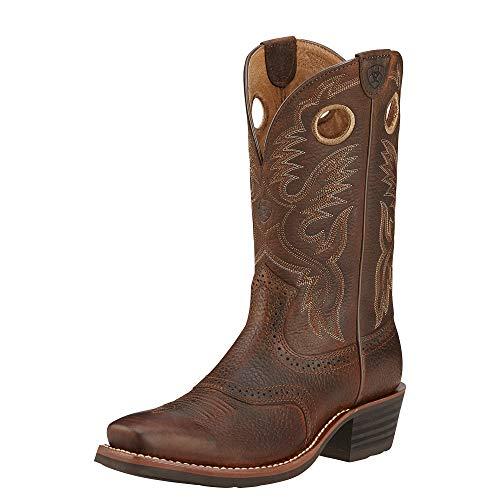
If you want one boot that will not be a mistake, this is the one most first-time buyers end up in. Ariat publishes a full-grain leather upper, Goodyear welt construction, a 12-inch shaft and a 2-inch western heel, with its Duratread outsole and a removable Pro Performance insole. The reason it suits a beginner is the combination: the welt means it can be resoled instead of thrown away, and the cushioned removable insole means it is wearable on day one rather than after a month of pain. It is sold in a square toe and in narrower shapes, so you can pick the toe that fits your foot rather than taking whatever the model comes in. At the usual street price it sits in the middle of the market - above the mall-brand boots that are glued together, below the handmade tier you do not need yet.
What you give up: You give up character. This is the Toyota Camry of cowboy boots - nobody in a boot shop will be impressed, and the leather will not develop the patina a $400 calfskin boot does.
Good
- Resoleable welt at a mid-market price
- Removable cushioned insole - comfortable from day one
- Sold in several toe shapes and widths
Less good
- Visually unremarkable
- Rubber outsole is not traditional
| Toe | Square (narrower shapes also sold) |
|---|---|
| Shaft | 12 in (per Ariat) |
| Heel | 2 in western |
| Upper | Full-grain leather |
| Construction | Goodyear welt - resoleable |
| Outsole | Duratread (Ariat's rubber compound) |
#ad - price checked on Amazon at the time you click. Last price check: November 28, 2026. How we are funded
Common questions
Is the Ariat Heritage Roughstock worth the money?
If you expect to wear boots roughly weekly or more, yes - the Goodyear welt means it can be resoled repeatedly, which costs less over years than replacing glued boots. For a few wears a year, you are paying for a feature you will never use and a cheaper boot is the rational buy.
Can the Ariat Heritage Roughstock be resoled?
Yes. Ariat states that its Goodyear welt construction allows resoling. A welted boot can typically be resoled three or four times before the upper and insole need attention themselves.
Does the Heritage Roughstock run true to size?
For most wearers it sits close to normal shoe size, and Ariat's sizing is the most predictable in mainstream western boots. The square toe gives lateral room across the front, but that is not the same as a wide width - if the whole foot feels tight rather than just the toes, you need a width letter rather than a different toe shape.
How long does it take to break in Ariat Heritage boots?
Underfoot, almost no time - the ATS footbed and removable cushioned insole mean the boot is wearable on day one. The shaft and the vamp still need the usual one to two weeks of short indoor sessions before a full day out. A boot still hurting after three weeks of correct break-in is the wrong size, not an unfinished one.
What is Duratread on Ariat boots?
Ariat's own rubber outsole compound. The company describes it as barnyard-acid resistant, meaning the sole resists degradation from the acids on a barn floor, and it grips far better than a leather sole on wet surfaces. The trade is that it reads casual rather than dressy.
What is the shaft height of the Heritage Roughstock?
Ariat lists 12 inches on the standard square toe version. Some retailers list a wide square toe variant at a taller shaft, so check the specification on the exact listing before ordering.
Sources
About the author
Selena H.
Selena H. is the owner and editor of Spur & Stitch. She started the site after discovering how much western-boot buying advice assumes you already know what a welt is. Every guide here is written for the person buying their first pair.
Read next
Boots
Ariat boots: what they make and who they fit
What Ariat makes, how the lines differ, and whether the sizing runs true for a first pair.

Boots
The best cowboy boots for beginners
Eight first pairs matched to real buyers, with the sizing and break-in answers on the same page.

Boots
Boot construction, explained
Goodyear welt, stitchdown and cemented construction - and why it decides resoling.

Boots
Ariat vs Tecovas: which should you buy?
Construction, sizing, price and comfort compared - and which suits a first pair.

Boots
How to read a cowboy boot review
How to tell a useful boot review from a rewritten spec sheet, and which customer reviews are worth your time.