Riding
The best western boots for riding
A riding boot is a safety item before it is a style choice. Here is what the heel, the sole and the shaft are for, then eight boots that get them right.
By Selena H. · Updated October 14, 2026
Spur & Stitch is reader-funded. As an Amazon Associate we earn from qualifying purchases - at no extra cost to you. Affiliate disclosure
We choose picks by comparing published specifications, construction, sizing guidance and aggregated owner feedback. We have not worn these boots ourselves. How we pick
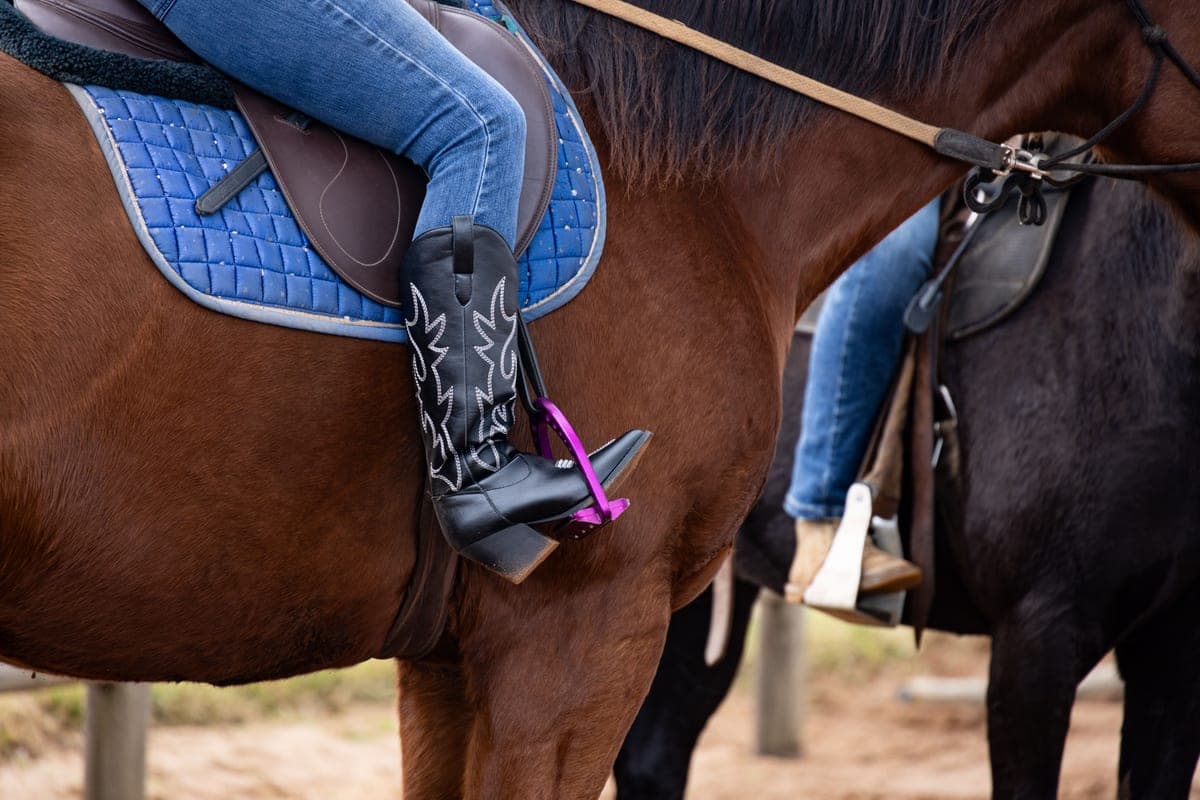
Almost every feature of a cowboy boot that looks like decoration started as a riding requirement. The heel is there so your foot cannot slide through a stirrup. The tall shaft is there so a stirrup leather does not rub your calf raw. The smooth sole is there so your foot comes out of the stirrup if you come off the horse. If you are buying boots to ride in, those three parts are the specification - and a lot of boots sold as western boots now get at least one of them wrong.
The short answer: for most riders who also want one pair of boots for the rest of their life, buy the Ariat Heritage Western R Toe - a 13-inch shaft and a 1.75-inch cowboy heel with a rounded toe that goes into a stirrup cleanly. If you ride often enough to care about the sole, buy the Dan Post Renegade CS instead, because its leather outsole is the slick surface a stirrup wants. Women who ride and do not want a second pair for town should start with the Ariat Round Up Wide Square Toe, which carries Ariat's Horseman heel.
One honest note before the picks. We have not ridden in these boots, and nobody should take safety advice from a product page. The criteria below come from published riding-safety guidance - Utah State University Extension and the British Horse Society both set out what footwear a stirrup needs - and the picks are the boots whose published specifications meet those criteria. The sources are listed in full at the end of this page. If you are riding in a lesson program or a trail outfit, ask them what their rules are first: some require a specific heel, some require a smooth sole, some supply safety stirrups that change the answer.
Quick picks
Tap any row to jump to the full write-up. The price column goes straight to Amazon.
| # | Product | Best for | Price |
|---|---|---|---|
| 1 |  Illustrative photo Illustrative photoAriat Heritage Western R ToeYou give up the slick sole a purist wants. | riding and everything else, in one boot | |
| 2 | Illustrative photo Dan Post Renegade CSYou give up easy entry. | a taller shaft and a distressed finish | |
| 3 |  Illustrative photo Illustrative photoAriat Heritage RoughstockYou give up character. | the safest first pair for most men | |
| 4 |  Illustrative photo Illustrative photoTony Lama BonhamYou give up toe-box room and cost. | a dressier traditional boot with a tall shaft | |
| 5 | 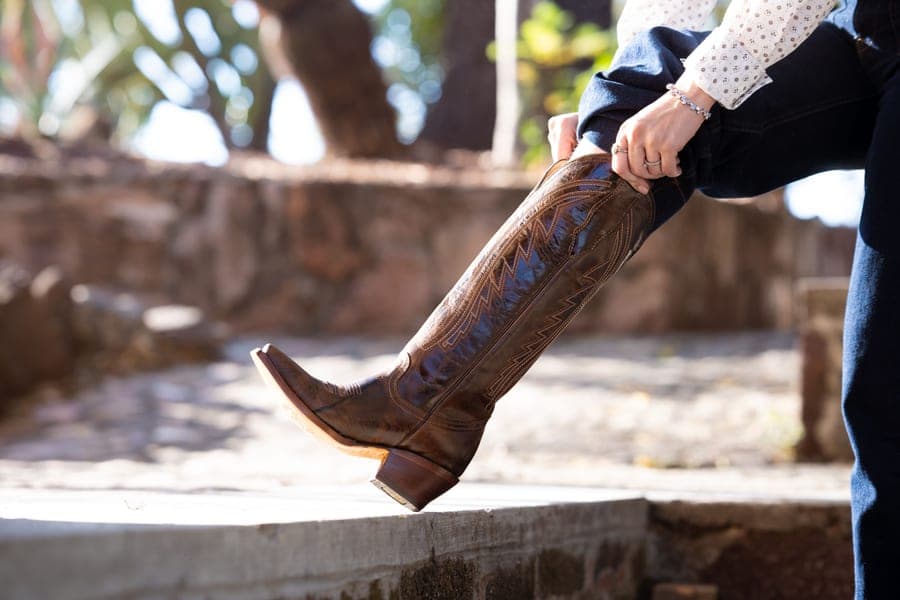 Illustrative photo Illustrative photoAriat Women's Round Up Wide Square ToeYou give up toe profile. | women who ride and do not want a second pair for town | |
| 6 | Illustrative photo Ariat Women's Heritage Western BootYou give up decoration. | the safest first pair for most women | |
| 7 | Illustrative photo Justin Stampede Western BootYou give up the finer leather and the cushioning of the tier above. | a traditional look on a tighter budget | |
| 8 | Illustrative photo Twisted X Tech X BootYou give up tradition and resoleability. | the most comfortable thing that still looks western |
#ad - price checked on Amazon at the time you click. Last price check: October 13, 2026. How we are funded
What makes a boot safe to ride in
Five properties, in the order that matters. Get the first three right and the boot is usable; get all five right and it is a riding boot rather than a boot you can ride in.
1. A heel with a defined back edge
The heel is the whole safety argument. Utah State University Extension puts it plainly: riding footwear should have a slight heel, which keeps the foot from sliding through the stirrup. The British Horse Society asks for a small heel of at least half an inch. A western riding heel is taller than that - usually 1.5 to 2 inches, undercut at the back so there is a hard step between heel and sole. That step is what catches the stirrup tread. A flat-soled boot, a sneaker or a roper with a barely-there heel gives the stirrup nothing to stop against, which is how a foot ends up through the iron.
2. A sole that slides rather than grips
This is the one most people get backwards, because every other kind of footwear is sold on grip. In a stirrup, grip is the hazard: you want the sole to release the stirrup instantly if you part company with the horse. The British Horse Society asks for a smooth through-sole so that nothing catches. That means a leather outsole, or a thin rubber sole with a smooth tread - and it rules out a lugged work-boot outsole entirely. A Vibram-style lug pattern will hold onto a stirrup tread exactly as it is designed to hold onto a hillside.
3. A shaft tall enough to take the stirrup leather
Eleven to 13 inches is the useful band. Below that, the stirrup leather and the saddle's sweat flap rub against your calf and your jeans, and after an hour that is a blister rather than an inconvenience. Men's riding boots are usually 12 or 13 inches; women's western boots cluster at 11. A tall shaft also keeps a bootcut jean from riding up over the top of the boot when you put your leg over the saddle, which is a real thing that happens on every short-shaft boot. We cover the measurements in cowboy boot shaft height.
4. A toe narrow enough to enter and leave the stirrup
A stirrup is a fixed opening and stirrup sizes are not standardized - a basic western leather stirrup may list an inside opening around 5 1/4 inches wide with a 2 1/2 inch tread, and a roper stirrup is wider again. The fit rule riders use is roughly half an inch of clearance on each side of the boot with the ball of your foot on the tread: much tighter than that can trap a foot, much looser lets it slide through. A pointed, snip or round toe leaves that clearance easily. A broad square toe is the widest profile you can put in a stirrup and in a narrow one it wedges - which is both annoying when you are mounting and dangerous if you need the foot out in a hurry. Square toes are not disqualified, they are just the shape you should check against your own stirrups before you ride. The shapes are compared in cowboy boot toe shapes.
5. Nothing on the boot that can hook
No laces, no speed hooks, no buckles sticking out at the ankle, no safety toe cap. A pull-on boot with a smooth exterior is the traditional riding boot precisely because there is nothing on it for a stirrup, a rope or a fence wire to catch. This is why a lace-up work boot is a poor riding boot even when it has a heel, and why a hiking boot is a bad idea on a horse however comfortable it is on the ground.
Pick 1
Ariat Heritage Western R Toe - best for riding and everything else, in one boot
Illustrative photoThis is the boot to buy if you ride occasionally and want the same pair to work at the feed store, at a wedding and at a concert. Listings for Ariat's Heritage Western R Toe put the shaft at 13 inches with a 1.75-inch cowboy heel, a full-grain leather foot and shaft, and Ariat's Duratread outsole. Three of those numbers are the reason it rides well: the tall shaft keeps a stirrup leather off your calf, the heel is high enough and square-cut enough at the back to stop your foot sliding forward through the stirrup, and the R toe is rounded rather than broad, so it goes into a stirrup and comes out again without catching. Retailer listings disagree about the lining on some colorways - some say leather, some synthetic - so read the description of the exact color you order rather than assuming.
What you give up: You give up the slick sole a purist wants. Duratread is grippier than leather, which is better on a barn floor and worse in a stirrup, because grip is exactly the property you do not want against a stirrup tread.
Good
- Shaft and heel are both correct for a stirrup
- Rounded toe clears a stirrup more easily than a square one
- Wears as an everyday boot off the horse
Less good
- Rubber outsole grips a stirrup more than leather does
- Spec details vary between colorways
| Shaft | 13 in (per retailer listings) |
|---|---|
| Heel | 1.75 in cowboy |
| Toe | R toe - rounded, not broad |
| Upper | Full-grain leather |
| Outsole | Duratread rubber |
| Lining | Listed as leather or synthetic depending on colorway |
Pick 2
Dan Post Renegade CS - best for a taller shaft and a distressed finish
Illustrative photoDan Post lists the Renegade CS with a distressed leather vamp and stitched upper, a square toe with a western heel, a single-stitched welt over a Dan Post leather outsole, full leather lining with its Ultimate Flex insole, and a 13-inch shaft. The 13-inch shaft is the reason to pick it: a taller shaft keeps a bootcut jean sitting where it should instead of bunching at the ankle, and it is what makes a boot look deliberate rather than borrowed. The distressed finish also forgives the scuffs a first pair inevitably collects in month one, which is a real advantage when you are still learning not to kick doorframes.
What you give up: You give up easy entry. A 13-inch shaft takes more effort to get on and off, and a leather sole again means caution on wet tile.
Good
- Tall shaft holds jeans properly
- Distressed finish hides early scuffs
- Resoleable welt
Less good
- Harder to pull on
- Leather sole is slick when new
| Toe | Square |
|---|---|
| Shaft | 13 in (per Dan Post) |
| Outsole | Leather, single-stitched welt |
| Lining | Full leather |
| Insole | Ultimate Flex |
Pick 3
Ariat Heritage Roughstock - best for the safest first pair for most men
Illustrative photoIf you want one boot that will not be a mistake, this is the one most first-time buyers end up in. Ariat publishes a full-grain leather upper, Goodyear welt construction, a 12-inch shaft and a 2-inch western heel, with its Duratread outsole and a removable Pro Performance insole. The reason it suits a beginner is the combination: the welt means it can be resoled instead of thrown away, and the cushioned removable insole means it is wearable on day one rather than after a month of pain. It is sold in a square toe and in narrower shapes, so you can pick the toe that fits your foot rather than taking whatever the model comes in. At the usual street price it sits in the middle of the market - above the mall-brand boots that are glued together, below the handmade tier you do not need yet.
What you give up: You give up character. This is the Toyota Camry of cowboy boots - nobody in a boot shop will be impressed, and the leather will not develop the patina a $400 calfskin boot does.
Good
- Resoleable welt at a mid-market price
- Removable cushioned insole - comfortable from day one
- Sold in several toe shapes and widths
Less good
- Visually unremarkable
- Rubber outsole is not traditional
| Toe | Square (narrower shapes also sold) |
|---|---|
| Shaft | 12 in (per Ariat) |
| Heel | 2 in western |
| Upper | Full-grain leather |
| Construction | Goodyear welt - resoleable |
| Outsole | Duratread (Ariat's rubber compound) |
Pick 4
Tony Lama Bonham - best for a dressier traditional boot with a tall shaft
Illustrative photoTony Lama sits in the slot between the mid-market brands and the handmade tier, and the Bonham is its cushion-comfort everyday boot, listed at a 13-inch height. The reason to put it on a beginner's list is the proportion: Tony Lama's shapes are narrower and more upright than the square-toe mainstream, so a boot like this works with a dress trouser in a way a wide square toe never will. If the occasion you are buying for is a wedding or a night out rather than a fairground, start here and in Justin's Bent Rail rather than in the sport lines.
What you give up: You give up toe-box room and cost. The narrower last is unforgiving if your foot is wide, and the price sits above the entry brands.
Good
- Dressier proportions
- Tall shaft
- Step up in finish
Less good
- Tight for wide feet
- Higher price than entry brands
| Shaft | 13 in (per Tony Lama) |
|---|---|
| Fit | Narrower, more upright last |
| Insole | Cushion comfort |
| Upper | Leather |
Pick 5
Ariat Women's Round Up Wide Square Toe - best for women who ride and do not want a second pair for town
Illustrative photoAriat's own store listings put the Round Up Wide Square Toe at an 11-inch shaft with a 1.375-inch Horseman heel, and the Horseman heel is the detail that matters: it is the shape Ariat puts on its riding-oriented boots, tapered at the back so the foot cannot slide forward through a stirrup. Eleven inches of shaft is shorter than a men's riding boot and still tall enough to keep a stirrup leather off your calf through a pair of jeans. The pay-off is that it does not look like tack. It is cut as a fashion-aware boot with Ariat's cushioned footbed, so the same pair carries you from an arena to a restaurant without a change. A StretchFit version is listed at the same 11-inch shaft and 1.375-inch heel, with an elastic panel at the top of the shaft for wider calves.
What you give up: You give up toe profile. A wide square toe is the widest thing you can put in a stirrup, so in a narrow or traditional stirrup it is a worse match than Ariat's own R toe.
Good
- Riding-shaped heel in a boot that reads as fashion
- Shaft tall enough to protect the calf
- Ariat sizing is predictable
Less good
- Wide square toe is the wrong shape for a narrow stirrup
- Shorter shaft than a men's riding boot
| Shaft | 11 in (per Ariat listings) |
|---|---|
| Heel | 1.375 in Horseman |
| Toe | Wide square |
| Footbed | Cushioned |
| Variant | StretchFit version listed at the same shaft and heel |
Pick 6
Ariat Women's Heritage Western Boot - best for the safest first pair for most women
Illustrative photoAriat's women's Heritage line is the direct equivalent of the men's Roughstock and the same logic applies: full-grain leather, a cushioned removable insole, and shapes that come in more than one toe so you can match the boot to your foot instead of the other way round. For a first pair, the R-toe and round-toe versions are the ones to look at - they are the shapes that work with jeans, with a dress, and at a wedding, and they do not date the way a very pointed snip toe can. Ariat's sizing runs close to a women's shoe size for most people, which is unusual in western boots and genuinely helpful when you are buying online for the first time.
What you give up: You give up decoration. These are plain boots - no scalloped top, no inlay, no stitch pattern anyone will compliment.
Good
- Forgiving sizing
- Several toe shapes
- Wears with jeans or a dress
Less good
- Plain
- Mid-market price
| Toe | R toe / round, by model |
|---|---|
| Upper | Full-grain leather |
| Insole | Removable cushioned footbed |
| Heel | Low to mid western |
| Sizing | Close to street shoe size for most wearers |
Pick 7
Justin Stampede Western Boot - best for a traditional look on a tighter budget
Illustrative photoThe Stampede line is Justin's straightforward, traditional western boot - stitched shaft, classic toe shapes, cushioned insole - and it is where to look if you want the real silhouette without the mid-market price. For a first pair, the appeal is that nothing about it is experimental: the shaft height and heel are conventional, so the boot behaves the way boot advice on the internet assumes a boot behaves. That matters more than it sounds. Half the confusion beginners hit comes from buying a fashion-forward shape and then reading sizing guidance written for a standard one.
What you give up: You give up the finer leather and the cushioning of the tier above. It is a plainer boot and the upper will crease sooner.
Good
- Conventional shape - sizing advice applies cleanly
- Established brand
- Lower entry price
Less good
- Plainer leather
- Less cushioning than premium lines
| Toe | Traditional western shapes |
|---|---|
| Shaft | Standard western height |
| Upper | Leather |
| Insole | Cushioned |
| Position | Entry to mid price |
Pick 8
Twisted X Tech X Boot - best for the most comfortable thing that still looks western
Illustrative photoTwisted X builds western boots the way an athletic brand would, and the Tech X is the clearest example. The company describes CellStretch comfort technology activating more than 100 individual pressure points in the heel and ball of the foot, a Blend85 recycled foam footbed, a nylon and glass-fiber shank, and a rubber outsole infused with blended rice husk, with a tapered heel and an integrated spur shelf. In plain terms: it is engineered for standing, and people who try it after a traditional boot usually do not go back. For a beginner it removes the break-in problem almost entirely, which is why it belongs on a shortlist even though it is the least traditional boot here.
What you give up: You give up tradition and resoleability. This is a modern composite boot - a bootmaker cannot rebuild it, and it will never patina like leather-soled calfskin.
Good
- Almost no break-in
- Best-in-class for standing
- Light
Less good
- Least traditional construction
- Not resoleable
- Sneaker-adjacent to purists
| Comfort | CellStretch pressure-point system (per Twisted X) |
|---|---|
| Footbed | Blend85 recycled foam |
| Shank | Nylon / glass fiber |
| Outsole | Rubber with blended rice husk |
| Heel | Tapered, integrated spur shelf |
#ad - price checked on Amazon at the time you click. Last price check: October 13, 2026. How we are funded
Riding boot, work boot, fashion boot
All three get sold as western boots and they are built for different jobs. If you are buying one pair and you ride at all, buy from the first column.
| Riding boot | Western work boot | Fashion western boot | |
|---|---|---|---|
| Heel | 1.5-2 in, undercut back edge | Low walking or rocker heel | Anything, often stacked and blocky |
| Outsole | Leather or smooth rubber | Lugged rubber, slip-resistant | Thin leather or stacked rubber |
| Shaft | 11-13 in | 10-11 in, sometimes lace-up | Short to tall, often decorated |
| Toe | Round, R toe, snip | Wide square, often safety toe | Snip, pointed or very square |
| Good at | Stirrup safety, long days mounted | Standing on concrete, wet barn floors | Looking right at a concert |
| Bad at | Grip on wet tile | Everything about a stirrup | Riding, and often walking |
How a riding boot should fit differently
The fit rules from our sizing guide still apply - snug across the ball of the foot, a firm pop over the instep, a quarter to half inch of heel lift, toes clear of the end. Riding adds three things on top.
- The instep hold matters more. Mounted, your weight is on the ball of your foot and the boot is held by the instep. A boot you can rock out of at the heel while standing will shift constantly in the stirrup.
- Allow for a thicker sock. A mid-calf wool or synthetic sock is the right sock for a long ride, and it takes up real volume. Try boots on with the sock you will ride in, not with a dress sock.
- Check the toe in your own stirrup before the first ride. Thirty seconds at the saddle rack tells you what no size chart can: whether the boot enters and leaves the stirrup without wedging.
What a riding boot should cost
Less than people expect, because the features that make a boot safe in a stirrup are cheap features. A heel and a smooth sole cost nothing extra; what you pay for above the entry tier is leather quality, a resoleable welt and finish.
| Budget | What you get | Who it suits |
|---|---|---|
| Entry tier | Leather upper, correct heel, rubber sole, glued build | Occasional riding, a few hours a month |
| Mid tier | Full-grain leather, welted and resoleable, 12-13 in shaft, cushioned removable insole | Anyone riding weekly - the band where almost every honest answer lives |
| Upper tier | Better leather, leather outsoles, narrower lasts, dressier finish | Riders who also want the boot to work in town, or who have already worn out a mid-tier pair |
| Custom | Made to your measurements, rebuilt indefinitely | Not a first pair. Buy here once you know exactly what your foot and your stirrups want |
Before your first ride in new boots
- Break them in on the ground first. A stiff new boot plus an unfamiliar stirrup is not the combination to discover a pressure point in. The method is in how to break in cowboy boots.
- Rough up a slick new leather sole on concrete before you ride. A factory-finished leather sole is glassy, and the first few rides are when it is least predictable.
- Ride with the ball of your foot on the stirrup tread, not the arch. A boot cannot save you from a foot pushed all the way home in the iron.
- Check your stirrup width against the boot once more with the sock you will wear. Half an inch of sock changes the answer.
- Clean the mud off the sole afterwards. Caked mud in a leather sole holds water, and a wet sole is the one that wears through. See how to clean cowboy boots.
The two things to buy with riding boots
Neither is glamorous. Proper socks are what stop the shaft rubbing on a long ride, and a jack is how you get a snug 13-inch boot off without crushing the heel counter you are relying on.
These links go to Amazon and we earn a commission if you buy. How we pick.

#ad - price checked on Amazon at the time you click. Last price check: October 13, 2026. How we are funded
What we left out, and why
Safety-toe work boots. Several brands sell a western-looking work boot with a composite toe. They are good boots for a feedlot and the wrong boots for a stirrup. English paddock and field boots. The correct answer for English disciplines, outside what this site covers. Packer boots. Lace-up packers are genuinely used by outfitters and guides, but the laces are a hooking risk and the fit is a specialist decision we are not in a position to guide you through. Boots sold only direct. Some of the best riding boots made in Texas are not sold through any retailer we can link you to, so they are not on this list - which is a limit of this page, not a judgment of the boots. Our brand map says who those makers are.
Safety criteria on this page come from Utah State University Extension's trail-riding guidance and the British Horse Society's footwear page, both cited in full below. Boot specifications are the makers' and retailers' published figures; where listings disagree we say so on the pick.
Common questions
Can you ride in square toe cowboy boots?
Usually yes, but check your stirrup first. A broad square toe is the widest profile you can put in a stirrup, and in a narrow or traditional western stirrup it can wedge. If your boots are square-toed and your stirrups are narrow, the cheaper fix is wider stirrups rather than new boots.
What heel height do you need for riding?
Published guidance asks only for a defined heel - the British Horse Society says at least half an inch, Utah State University Extension says a slight heel is enough. Western riding boots usually run 1.5 to 2 inches with an undercut back edge, which is more than the minimum and gives the stirrup a clear step to stop against.
Are rubber-soled cowboy boots safe for riding?
A thin rubber sole with a smooth tread is widely used and fine. A lugged or deeply treaded outsole is not: it grips the stirrup tread, which is the opposite of what you want if you come off. If your only pair has a lug sole, a cobbler can fit a smooth half sole for far less than new boots.
How tall should riding boots be?
Eleven to 13 inches. The shaft exists to keep the stirrup leather and saddle flap off your calf, and below about 11 inches it stops doing that job. Men's riding boots are commonly 12 or 13 inches; most women's western boots are 11.
Can you wear work boots to ride a horse?
You can, and it is a bad habit. Work boots pair a lugged sole with a low heel and often laces - three properties that each make the stirrup more dangerous. They are the right boots for the barn and the wrong boots for the saddle.
Should jeans be tucked into riding boots?
No for western riding - jeans go over the boot, which is why a bootcut leg exists. Tucking is a rodeo and show convention in some events. Either way the shaft needs to be tall enough that the hem does not ride above it when your leg is over the saddle.
Do you need spurs, and do these boots take them?
Spurs are a training aid, not a beginner purchase - learn to ride first. If you later want them, any boot with a defined heel shelf will hold a spur strap, and some modern boots like the Twisted X Tech X list an integrated spur shelf.
Sources
About the author
Selena H.
Selena H. is the owner and editor of Spur & Stitch. She started the site after discovering how much western-boot buying advice assumes you already know what a welt is. Every guide here is written for the person buying their first pair.
Read next
Boots
Cowboy boot heel types and heights
Riding, walking, roper, stockman and rocker heels - what each does to comfort and balance.
Boots
Why do cowboy boots have heels?
The angled heel is a riding safety feature, not a style choice - and whether you need one.
Boots
Leather sole vs rubber sole cowboy boots
Grip, wear, formality and resoling - plus the cheap fix that gets you both.
Boots
Cowboy boot shaft height
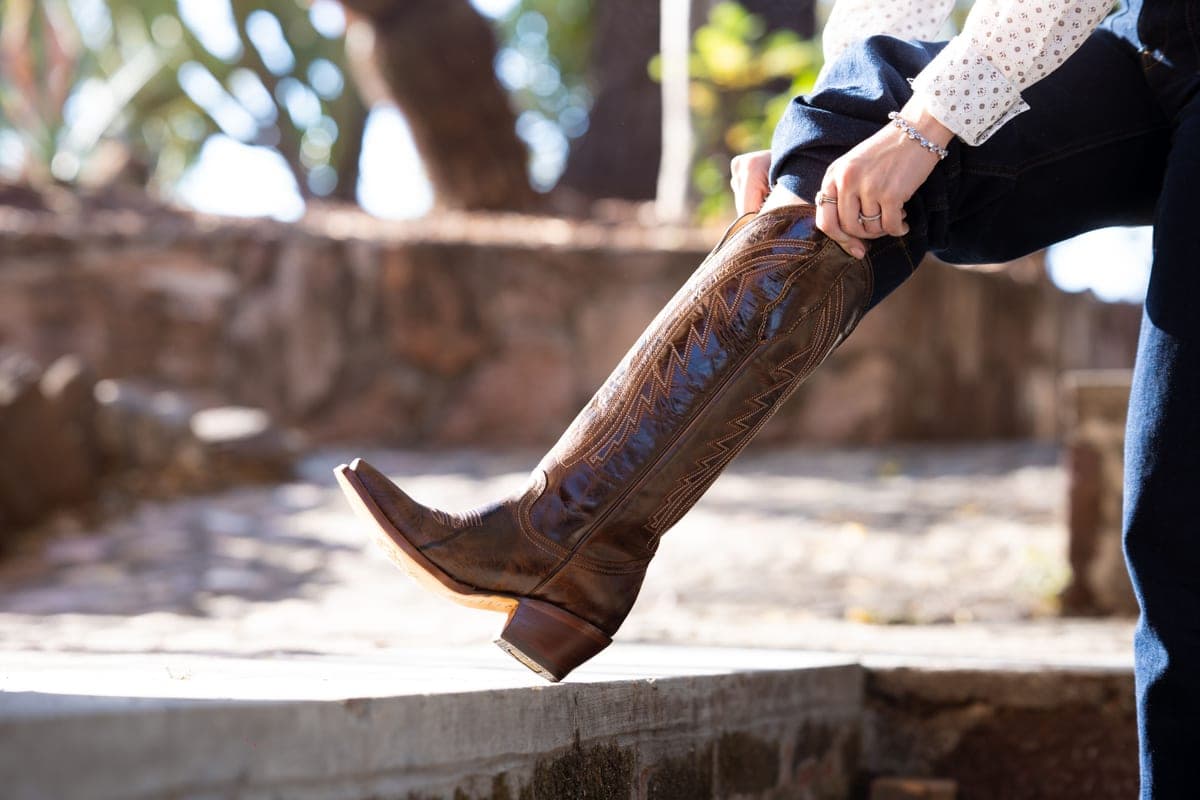
What 8, 11, 13 and 15-inch shafts each do under jeans - and how hard each is to pull on.
Outfits
What to wear to your first rodeo
A rodeo is more traditional than a concert, and the conventions are observed. What to wear.