Boots
Cutter toe vs square toe cowboy boots
One is the dressy, stirrup-friendly version of the other. The decision is width first, look second.
By Selena H. · Updated November 4, 2026
Spur & Stitch is reader-funded. As an Amazon Associate we earn from qualifying purchases - at no extra cost to you. Affiliate disclosure
We choose picks by comparing published specifications, construction, sizing guidance and aggregated owner feedback. We have not worn these boots ourselves. How we pick
Buy a cutter toe if you like the square-toe look but have a normal or slim forefoot, if you ride, or if the boot needs to work with slimmer jeans and dressier clothes. Buy a square toe if you want room across the front of your foot, you are on your feet for hours, or you wear a thick boot sock. The cutter is the narrower, dressier shape; the square is the roomier, more casual one.
That is the whole decision, and it is a width decision wearing a style decision's clothes. If you have already read wide square toe vs square toe, you know the square family runs from broad down to snoot; this page is about the rung most people actually end up choosing between, because the cutter is the one that looks modern without the blunt front end.
What a cutter toe actually is
A cutter is a square toe that has been drawn in at the sides. Ariat's own toe-style guide describes it as a distinctive square toe with a slightly tapered profile, and Durango's guide calls it a narrower square toe look. The tip is still flat across - that is what makes it read as a square from a few feet away - but the sides angle inward toward it rather than running out wide, so the widest point of the toe box sits further back on your foot.
A standard square, by contrast, is described by Ariat simply as a more squared-off shape than the round toe, and the brand notes it is often preferred by those who spend long hours on their feet. That is the honest summary of the difference in one line: the square is a comfort shape, the cutter is a profile shape.
| Cutter toe | Square toe | |
|---|---|---|
| Shape of the tip | Flat, but tapered in at the sides | Flat and run out wide |
| Room across the forefoot | Less than a square, more than a snip | Moderate to generous |
| Visual weight | Modern but trim | Modern and blunt |
| In a stirrup | Clears it - the narrow profile is the point | Workable; a broad square is not |
| Thick boot socks | Tight | Fine |
| Standing all day | Acceptable | The better choice |
| Under a slim or straight jean | Clean line | Needs a straight or bootcut leg |
| Dresses up | Yes, especially on a leather sole | Sometimes |
| If you buy wrong | Pinches across the ball of the foot | Looks heavier than you wanted |
The one comparison where nothing else changes
Most toe-shape comparisons are confounded - you end up comparing two different boots from two different lines and attributing the difference to the toe. Ariat's Sport line removes that problem, because it is sold in a narrow cutter toe and in a plain square toe on the same platform. Ariat's listings put the cutter model at an 11-inch shaft with a 1.75-inch Futurity heel; Boot Barn lists the square-toe version of the same line at an 11-inch shaft with a 1.75-inch western heel. Same shaft, same heel height, same ATS support underneath. If you want to know what a cutter toe does and nothing else, that is the pair to look at.
Quick picks
Tap any row to jump to the full write-up. The price column goes straight to Amazon.
| # | Product | Best for | Price |
|---|---|---|---|
| 1 | 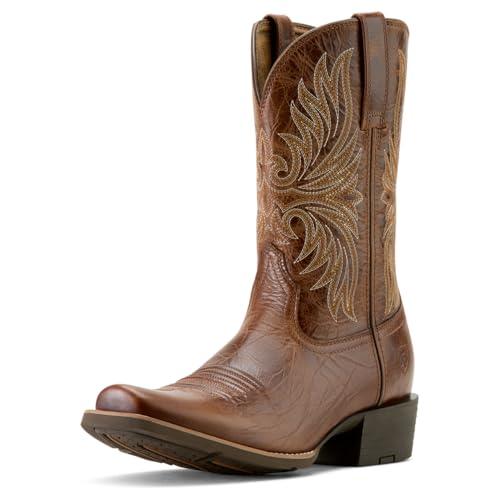 No offer at last check Ariat Sport Narrow Cutter ToeYou give up forefoot room. | the square-toe look in a boot that still fits a stirrup | |
| 2 | 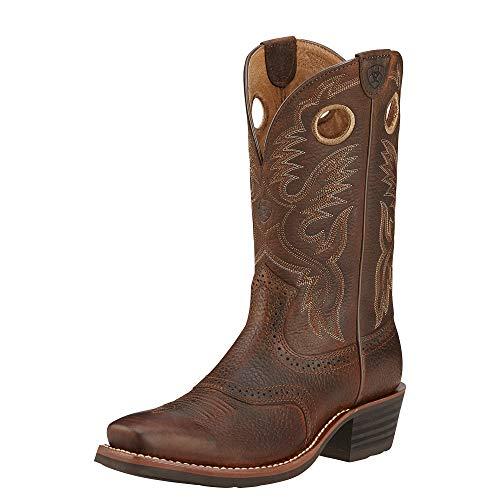 Ariat Heritage RoughstockYou give up character. | the safest first pair for most men | |
| 3 | 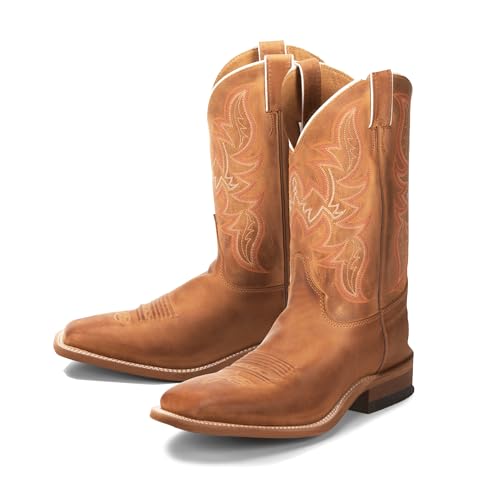 Justin Austin II Bent RailYou give up wet-weather confidence and grip. | a first pair you can wear to a wedding | |
| 4 | 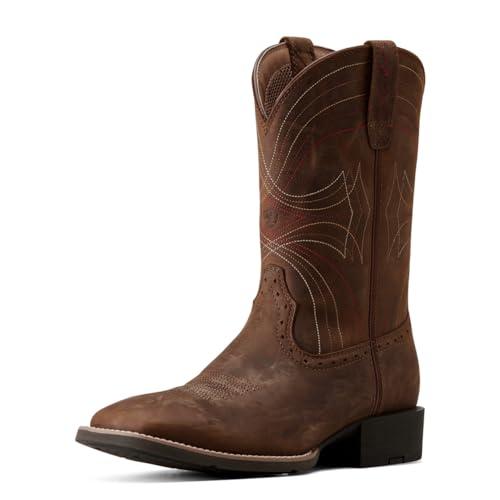 Ariat Sport Wide Square ToeYou give up a dressy line. | wide feet, without ordering a special width | |
| 5 | 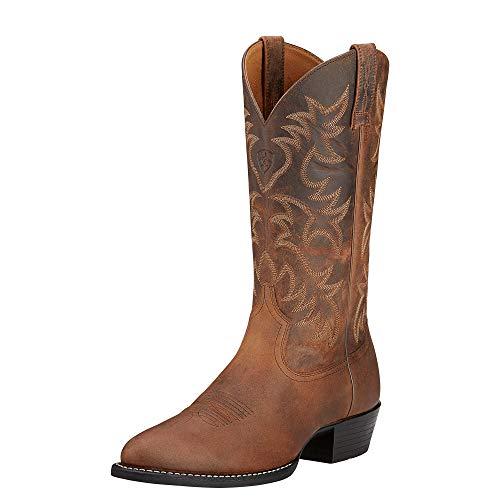 Ariat Heritage Western R ToeYou give up the slick sole a purist wants. | riding and everything else, in one boot |
#ad - price checked on Amazon at the time you click. Last price check: November 28, 2026. How we are funded
Why riders end up in cutters
A stirrup is a fixed-width opening and a broad square toe is the widest thing you can try to put in one. A tapered toe goes in and comes out cleanly, which is why cutter and snip shapes cluster in the rider-oriented and dressier lines while broad squares cluster in work and ranch lines. One maker explicitly describes the cutter as designed to give the toes more space than a pointed toe while staying narrow enough for a stirrup, and that is a fair description of the compromise.
Two caveats before you buy a cutter for riding. The toe is only one of three things that matter in a stirrup - heel shape and sole material matter at least as much, and a grippy rubber outsole is the wrong property against a stirrup tread. And a cutter is not a substitute for a riding-specific boot if you ride seriously: the shaft height and heel type are what actually keep your foot where it belongs. Our best boots for riding covers that properly, and cowboy boot heel types explains why the back of the heel is cut the way it is.
Which one dresses up
The cutter, comfortably. A tapered toe on a leather sole is close to the dressiest thing available in a western boot that is not a full pointed toe, and it is the shape that works under a suit trouser or a dark straight-leg jean without announcing itself. A square toe can be dressed up - a leather sole helps a great deal - but a broad square cannot, and that is the practical limit of the square family. If a single pair has to cover a wedding, a bar and a Tuesday, the cutter is the safer buy; the full argument is in cowboy boots with a suit and cowboy boots with jeans.
How to tell which your foot wants
- Your little toe is the thing that hurts in shoes - buy a square, and consider a broad square. A cutter will reproduce the problem.
- Shoes fit fine but you want the modern look - cutter. This is the shape most people are actually looking for when they say square toe.
- You wear a heavy boot sock, or stand for eight hours - square. A tapered toe box plus a thick sock is how people end up with numb toes.
- You ride, in a standard or narrow stirrup - cutter, or Ariat's R toe if you want rounded rather than squared.
- Whole foot feels tight in boots, not just the toes - neither shape fixes it. You need a wider width letter; see cowboy boot width letters.
Pick 1
Ariat Sport Narrow Cutter Toe - best for the square-toe look in a boot that still fits a stirrup
No offer at last checkThe cutter is the toe shape for people who like how a square toe looks and cannot live with how one fits. Ariat's own listings for the Sport Narrow Cutter Toe put it at an 11-inch shaft with a 1.75-inch Futurity heel, ATS support and a removable All Day Cushioning insole, and retailers add Ariat's Duratread outsole. The toe itself is what you are buying: Ariat describes a cutter as a distinctive square toe with a slightly tapered profile, which in practice means a squared tip that is drawn in at the sides rather than run flat across. The useful consequence is that it reads as a modern square-toe boot from a distance while staying narrow enough to clear a stirrup and to sit under a slimmer jean without looking top-heavy. The Sport line is also sold in a plain square toe on the same 11-inch shaft and 1.75-inch heel, which makes this the rare pair of boots where you can compare toe shapes with every other variable held still.
What you give up: You give up forefoot room. A tapered square is narrower across the ball of the foot than a standard square and much narrower than a broad one, so if your little toe is the part that hurts in shoes, this is the wrong shape however good it looks.
Good
- Square-toe look without the width
- Clears a stirrup better than a square toe
- Sits under a slimmer jean cleanly
Less good
- Too narrow for a wide forefoot
- Not a roomy all-day work shape
- Rubber outsole is not a dress sole
| Toe | Narrow cutter - tapered square |
|---|---|
| Shaft | 11 in (per Ariat) |
| Heel | 1.75 in Futurity |
| Support | ATS, removable All Day Cushioning insole |
| Outsole | Duratread (per retailer listings) |
Pick 2
Ariat Heritage Roughstock - best for the safest first pair for most men
If you want one boot that will not be a mistake, this is the one most first-time buyers end up in. Ariat publishes a full-grain leather upper, Goodyear welt construction, a 12-inch shaft and a 2-inch western heel, with its Duratread outsole and a removable Pro Performance insole. The reason it suits a beginner is the combination: the welt means it can be resoled instead of thrown away, and the cushioned removable insole means it is wearable on day one rather than after a month of pain. It is sold in a square toe and in narrower shapes, so you can pick the toe that fits your foot rather than taking whatever the model comes in. At the usual street price it sits in the middle of the market - above the mall-brand boots that are glued together, below the handmade tier you do not need yet.
What you give up: You give up character. This is the Toyota Camry of cowboy boots - nobody in a boot shop will be impressed, and the leather will not develop the patina a $400 calfskin boot does.
Good
- Resoleable welt at a mid-market price
- Removable cushioned insole - comfortable from day one
- Sold in several toe shapes and widths
Less good
- Visually unremarkable
- Rubber outsole is not traditional
| Toe | Square (narrower shapes also sold) |
|---|---|
| Shaft | 12 in (per Ariat) |
| Heel | 2 in western |
| Upper | Full-grain leather |
| Construction | Goodyear welt - resoleable |
| Outsole | Duratread (Ariat's rubber compound) |
Pick 3
Justin Austin II Bent Rail - best for a first pair you can wear to a wedding
Justin's Bent Rail collection is the answer to a question beginners ask constantly: which cowboy boot does not look like a work boot. Justin publishes a leather upper over a leather outsole with a double-stitched welt, an 11-inch boot height, a broad square toe and its J-Flex insole. The leather outsole is the part that matters for dressing up - it is thinner and quieter than rubber, it takes a shine, and it is why this boot reads as footwear rather than equipment. The broad square toe keeps it comfortable despite that. Justin states the line is handcrafted in the USA with globally sourced materials, which is unusual at this price.
What you give up: You give up wet-weather confidence and grip. A leather sole is slick on tile and wet pavement until it wears in, and it is not what you want for a muddy field.
Good
- Dressy leather sole at a mid price
- Broad square toe is roomy
- Resoleable welt
Less good
- Slick on smooth and wet surfaces
- Leather sole needs protecting
| Toe | Broad square |
|---|---|
| Height | 11 in (per Justin) |
| Outsole | Leather, double-stitched welt |
| Insole | J-Flex Flexible Comfort System |
| Made | USA with globally sourced materials |
Pick 4
Ariat Sport Wide Square Toe - best for wide feet, without ordering a special width
Wide feet are the single most common reason a first pair gets returned, and the usual advice - order a D or EE width - only helps if the retailer stocks it. A wide square toe solves the problem from the other direction by giving the front of the foot room in the toe box itself, which is where the pain actually is. Ariat's Sport line is built on that wide square shape with a lightweight rubber outsole and a cushioned footbed, and it is the pair to try before you start paying for custom widths. Order your normal size first: a wide square toe already buys you most of the room a width letter would, and going up a half size usually produces heel slip instead of comfort.
What you give up: You give up a dressy line. A wide square toe is a blunt, modern shape - it looks right with bootcut jeans and wrong with a suit.
Good
- Toe-box room without hunting for a width
- Light for a western boot
- Easy on hard floors
Less good
- Blunt modern shape
- Not a dress boot
| Toe | Wide square |
|---|---|
| Upper | Leather |
| Outsole | Lightweight rubber |
| Footbed | Cushioned |
| Fit note | Order your normal size, not a half up |
Pick 5
Ariat Heritage Western R Toe - best for riding and everything else, in one boot
This is the boot to buy if you ride occasionally and want the same pair to work at the feed store, at a wedding and at a concert. Listings for Ariat's Heritage Western R Toe put the shaft at 13 inches with a 1.75-inch cowboy heel, a full-grain leather foot and shaft, and Ariat's Duratread outsole. Three of those numbers are the reason it rides well: the tall shaft keeps a stirrup leather off your calf, the heel is high enough and square-cut enough at the back to stop your foot sliding forward through the stirrup, and the R toe is rounded rather than broad, so it goes into a stirrup and comes out again without catching. Retailer listings disagree about the lining on some colorways - some say leather, some synthetic - so read the description of the exact color you order rather than assuming.
What you give up: You give up the slick sole a purist wants. Duratread is grippier than leather, which is better on a barn floor and worse in a stirrup, because grip is exactly the property you do not want against a stirrup tread.
Good
- Shaft and heel are both correct for a stirrup
- Rounded toe clears a stirrup more easily than a square one
- Wears as an everyday boot off the horse
Less good
- Rubber outsole grips a stirrup more than leather does
- Spec details vary between colorways
| Shaft | 13 in (per retailer listings) |
|---|---|
| Heel | 1.75 in cowboy |
| Toe | R toe - rounded, not broad |
| Upper | Full-grain leather |
| Outsole | Duratread rubber |
| Lining | Listed as leather or synthetic depending on colorway |
#ad - price checked on Amazon at the time you click. Last price check: November 28, 2026. How we are funded
Sizing between the two
Order your normal size in both, and do not try to buy width with length. The specific trap on a cutter is this: the shape is narrower than the square you tried on, so the instinct is to go up a half size - which adds length and heel room, not forefoot width, and heel slip is the one fit fault that never resolves with wear. If a cutter in your size pinches across the ball of your foot, the answer is a wider width letter or a different shape, not a bigger boot. The full check is in the cowboy boot sizing guide, and heel slip explained covers what to do if you have already done it.
Where the names stop being reliable
Toe naming is not standardized across the industry. Cutter, snoot, broad square, wide square and narrow square are used differently by different makers, and the same word can describe visibly different shapes two racks apart. The practical defense is to read the toe field on the listing you are actually buying from, and to treat the model name as marketing - Arena, Sport, Bent Rail and the rest are boot lines, not toe shapes, and most of them are sold in several toes.
Toe definitions above are quoted from Ariat's and Durango's own published toe guides, and the shaft and heel figures are from the makers' and retailers' own listings - all linked in Sources. We have not worn these boots. Toe naming is not standardized between brands, so treat the labels as how the terms are generally used rather than as a specification.
Which to buy
- Normal-width foot, wants the modern look, might ride - a cutter toe. It is the most versatile shape in the square family and the only one that dresses up reliably.
- Wide forefoot, long days standing, thick socks - a square toe, and a broad square if the forefoot is the specific problem.
- One pair for weddings and everything else - a cutter on a leather sole, or a broad square on a leather sole if you need the room and can live with the heavier look.
- Slim foot that still finds squares loose - look at a snip or an R toe rather than going narrower within the square family.
- Not sure yet - buy the square. It is the more forgiving mistake: a slightly roomy boot with a thicker sock is wearable, and a boot that pinches across the ball of your foot never will be.
For the full map of every toe on the wall rather than this pairing, start with cowboy boot toe shapes, and square toe vs round toe covers the other comparison most first-time buyers are weighing.
Common questions
What is a cutter toe on a cowboy boot?
A square toe that has been tapered in at the sides. Ariat describes it as a distinctive square toe with a slightly tapered profile and Durango calls it a narrower square toe look. The tip is still flat, but the widest part of the toe box sits further back on the foot than it does on a standard square.
Is a cutter toe the same as a square toe?
No. It is a narrower version of one. A standard square runs out wide and gives more room across the forefoot; a cutter angles in toward a flat tip, which is why it looks trimmer and fits a stirrup better but is tighter across the ball of the foot.
Is a cutter toe or a square toe better for wide feet?
A square toe, and a broad or wide square if the front of your foot is the specific problem. A cutter is tapered, so it offers less forefoot room than a standard square - the shape will reproduce exactly the pinching you are trying to escape.
Which toe shape is better for riding?
A cutter, between these two. A stirrup is a fixed-width opening, so a tapered toe clears it where a broad square does not. Heel shape and sole material matter as much as the toe, though, and a rounded R toe is an equally good rider's shape if you do not want a squared tip.
Can you wear cutter toe boots with a suit?
Yes, and it is the most suit-friendly shape in the square family, particularly on a leather sole. A standard square can work with a suit; a broad square cannot, because the blunt front end is visually at odds with tailored clothing.
Should I size up in cutter toe boots?
No. Order your normal size. Going up a half size adds length and heel room rather than forefoot width, which produces heel slip - a fault that does not resolve with wear. If a cutter pinches in your size, you need a wider width letter or a different toe shape.
Is a cutter toe the same as a snip toe?
No. A snip toe starts as a pointed toe with the very end snipped flat, so it is narrower again and reads as a fashion shape. A cutter starts as a square and is tapered. Both are narrow, but the snip is the pointier of the two.
Sources
- Ariat - Cowboy boot toe styles guide (cutter, square, wide square, snip, round)
- Durango - Western toe types and shapes
- Ariat - Sport Narrow Cutter Toe cowboy boot (11 in shaft, 1.75 in Futurity heel)
- Boot Barn - Ariat Sport Narrow Performance western boot, square toe (11 in shaft, 1.75 in heel)
- Farm & Fleet - Ariat Renegade Narrow Cutter Toe listing
About the author
Selena H.
Selena H. is the owner and editor of Spur & Stitch. She started the site after discovering how much western-boot buying advice assumes you already know what a welt is. Every guide here is written for the person buying their first pair.
Read next
Boots
Wide square toe vs square toe cowboy boots
What wide square, broad square and cutter actually mean - and which square toe fits your foot best.
Boots
Cowboy boot toe shapes, explained
All seven western toe shapes, what each does to fit and formality, and which suits your foot.
Boots
Square toe vs round toe cowboy boots
Fit, formality and jeans - the practical difference between square and round toes.
Boots
Snip toe vs square toe cowboy boots
The dressiest shape against the most popular, plus the sizing trap in a snip toe.

Boots
The best square toe cowboy boots
Five square toe boots, and the difference between square, broad square and wide square.